

The Cocoa Bean and Its Ecosystem
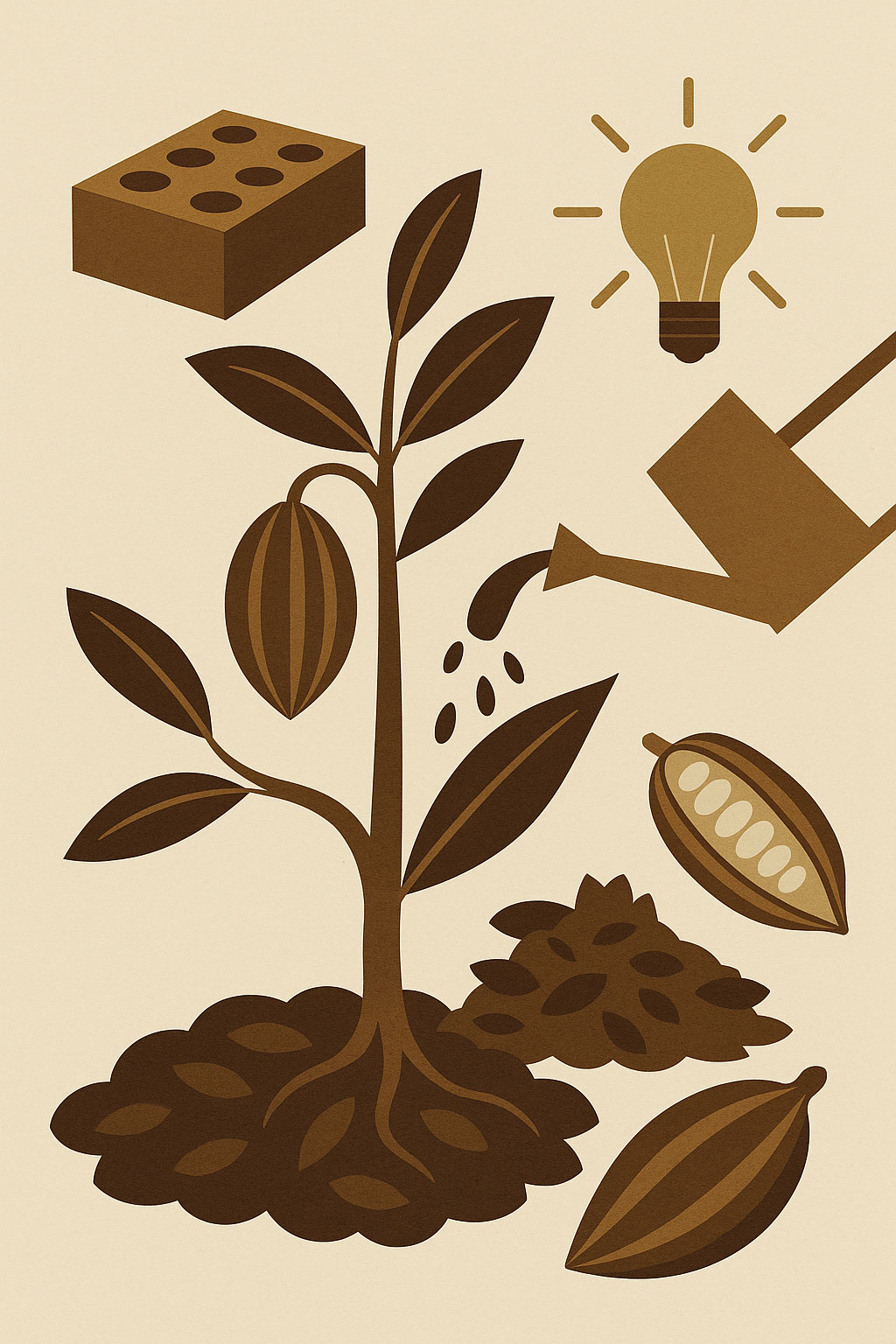
Cocoa processing generates much more than just beans: husks, empty pods, residual pulp, mucilage… These plant-based co-products were long overlooked, but are now gaining attention for their agronomic, energetic, and even industrial potential. These so-called “secondary materials” are increasingly valued as full-fledged resources in circular economy models.
Compost and Mulch: Natural Soil Fertilizers
In agroforestry plantations, crushed cocoa pods and bean husks are often used as compost or organic mulch. Rich in potassium and carbon-based matter, they improve soil structure, retain moisture, reduce erosion, and support microbial activity. This simple, renewable, and local practice reduces the need for chemical fertilizers while sustainably enriching the soil.
Construction Materials: Toward Cocoa-Based Bricks
In various cocoa-producing regions (West Africa, South America, Southeast Asia), applied research and sustainable engineering projects are transforming cocoa waste into bio-based building materials. Fibers from cocoa pods or husks are used to create:
-
lightweight bricks,
-
insulating panels,
-
or particle boards for eco-construction fillers.
These composite materials are sometimes combined with natural binders such as clay or latex, aiming to reduce the carbon footprint of the construction sector in tropical zones.
Bioenergy: Renewable Heat from Cocoa Waste
Cocoa husks, rich in lignin, can be dried and burned to produce energy:
-
in traditional drying ovens, to heat and dry other batches of cocoa beans,
-
or in pilot projects involving pyrolysis and gasification, notably in Ghana, Cameroon, and Brazil, to power small rural electricity networks.
This biomass is a renewable alternative to wood or charcoal, supporting local energy resilience.
Urban Gardening: A New Life in Our Gardens
In consumer countries (Europe, North America), cocoa husks are sometimes used as mulch in home gardens, urban farms, parks, and greenhouses. Their decorative appearance, natural fragrance, and ability to suppress weed growth make them a popular solution in sustainable horticulture. Over time, they enrich the soil while reducing water evaporation and irrigation needs.
Orfève’s Approach
At Orfève, we use every part of the cocoa bean with precision and purpose. While our top priority remains the aromatic quality of our chocolate, we actively follow the progress of cocoa by-product valorization. By giving new value to every element of the pod, we contribute to sustainable, nature-respecting agricultural models.