

The Cocoa Bean and Its Ecosystem
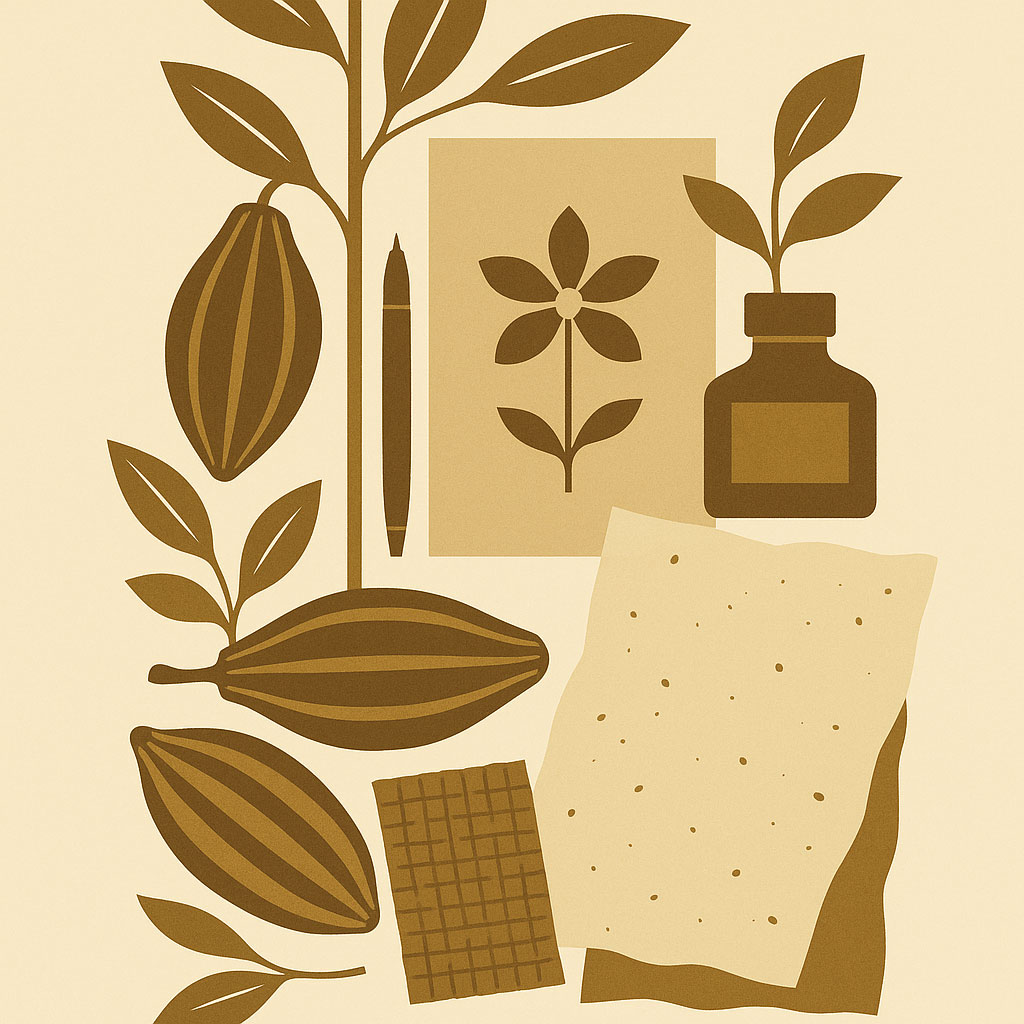
Beyond indulgence, cocoa is gradually asserting itself as a creative and functional resource in unexpected domains. From artisanal stationery to innovative biomaterials, its by-products, husks, pods, raw powder or grinding residues, are becoming raw materials for new industries, at the intersection of ecology, craftsmanship, and innovation.
Artisanal Paper Dyed with Cocoa
In various cocoa-growing regions (Latin America, Southeast Asia), workshops are turning plant fibers from cocoa pods into textured, biodegradable paper. Natural pigments made from cocoa powder or micronized bean residues are then added, giving the paper a warm brown hue and a raw aesthetic. These papers are often used for limited editions, premium notebooks, or handmade packaging.
Eco-Friendly Inks: Chocolate-Colored Alternatives
Inspired by plant-based ink movements, startups and universities are developing natural inks made with cocoa, suitable for handwriting, printing, and screen-printing. Using natural binders and micronized cocoa residues, these inks provide an eco-friendly alternative to synthetic dyes, while repurposing a by-product rich in antioxidants.
Textile Dyeing: An Organic Color Palette
In Colombia, Peru, and even Japan, textile artisans and designers are using cocoa-based decoctions (from husks, powder, or ground beans) to naturally dye plant fibers such as cotton, hemp, or linen. The result is a warm and nuanced brown palette, highly valued in ethical fashion collections and artisanal textiles.
Bioplastics and Innovative Materials
The potential of cocoa doesn’t stop there. Research in biomaterials is actively exploring new functional applications:
-
bioplastics made from husks or fermented pulp,
-
flexible composites for biodegradable packaging,
-
food-safe films enriched with cocoa-derived antioxidants.
These applications aim to reduce plastic dependency, extend the value of cocoa beyond food, and open the door to a more circular, responsible economy.
Orfève’s Approach
At Orfève, we focus our expertise on the bean itself and its aromatic potential. However, we closely follow innovations in sustainable cocoa by-product valorization, because every part of the pod deserves consideration. These initiatives remind us that cocoa, far beyond chocolate, is a living material brimming with possibilities.