

The Secrets of Chocolate making
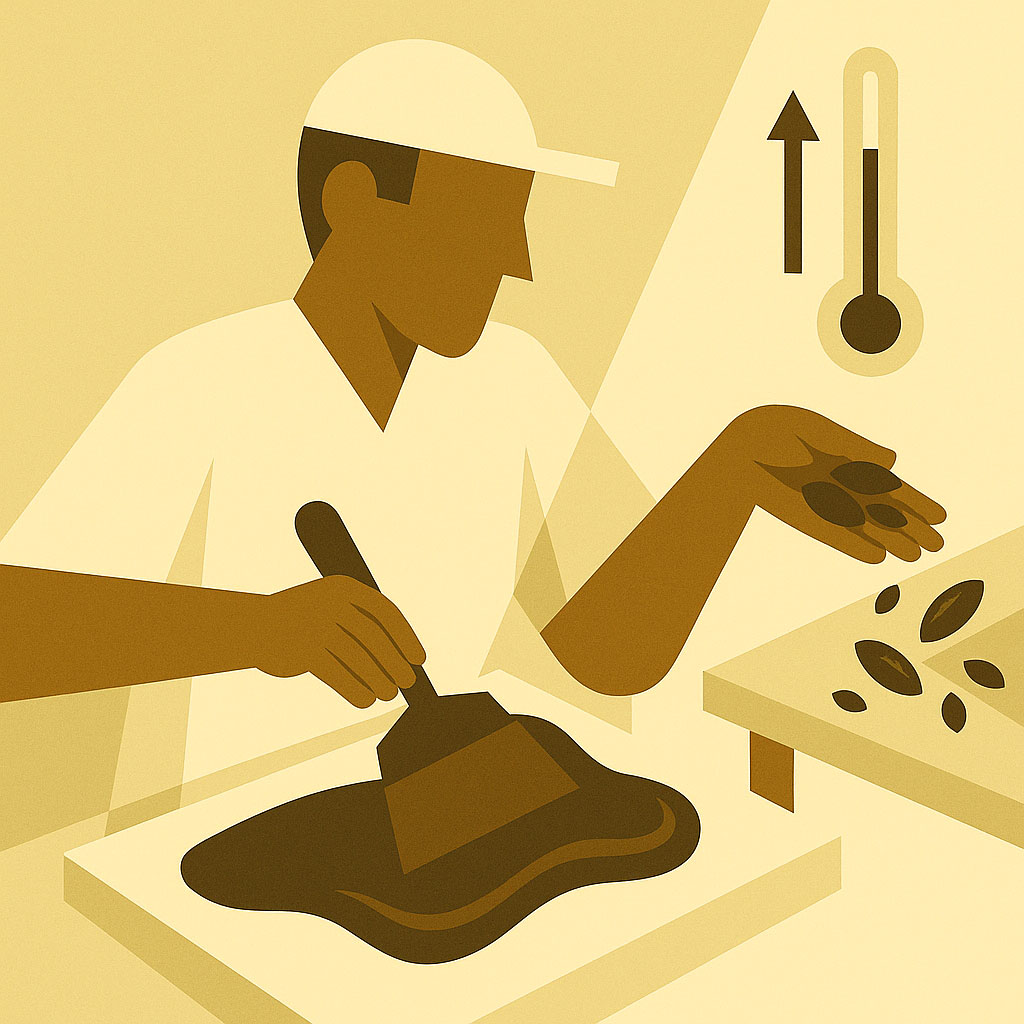
Tempering is the final step before molding chocolate.
It’s a technical and delicate process that gives a chocolate bar its shine, snap, and shelf stability.
Why Do We Temper Chocolate?
Cocoa butter, the natural fat found in cocoa beans, can crystallize in several different ways.
But only one crystal form creates chocolate that is solid, glossy, and melts beautifully in the mouth.
To encourage cocoa butter to take this specific form, the chocolate must be fully melted, then carefully cooled and reheated using a precise temperature curve.
Think of it like a military drill: all the crystals must align in a stable formation. Without that, the chocolate may become dull, crumbly, or develop white streaks over time.
How Does Tempering Work?
-
The chocolate is heated to about 45 °C (113°F) to melt all existing crystal forms.
-
It’s then cooled to around 28–29 °C (82–84°F) to initiate formation of the right crystal type.
-
It’s gently reheated to 31–32 °C (88–90°F) for dark chocolate, or 29–30 °C (84–86°F) for milk or white chocolate,just enough to become fluid and moldable.
This final stage is called the supercooled zone: the chocolate stays liquid, even below its natural melting point (around 35 °C), as long as it is kept in motion.
The same effect occurs in a river at 0 °C that doesn’t freeze as long as it flows.
What If You Skip Tempering?
Un-tempered chocolate may:
-
Turn white or streaky (called fat bloom)
-
Become crumbly
-
Melt unevenly
-
Lose visual appeal
Why Does Chocolate Melt in Your Mouth?
Cocoa butter is the only natural fat that melts precisely at body temperature.
That’s why chocolate remains solid at room temperature, but melts the instant it hits your tongue, releasing all its aromas in one smooth wave.