

A bit of History
When Spanish conquistadors arrived in the heart of Mexico in the early 16th century, they encountered a highly structured and refined civilization, and a bitter drink served in precious vessels: cacao.
For the Aztecs, cacao was no sweet indulgence. It was a strategic resource, a marker of social status, and a spiritual medium. It embodied the connection between warfare, wealth, and the gods.
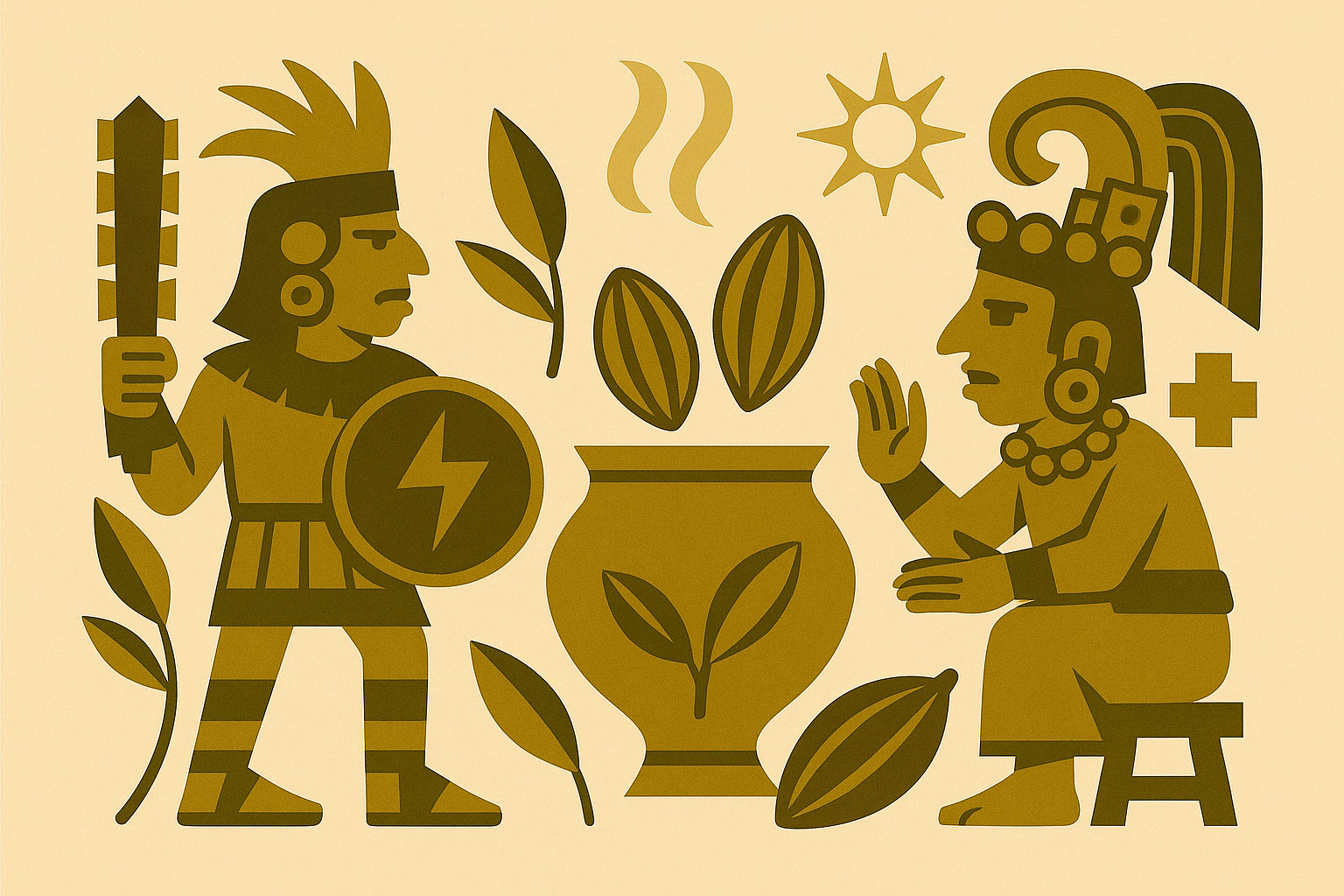
Cacao as Imperial Currency
In the Aztec empire, cacao beans functioned as official currency. They were used to pay taxes, purchase goods, and reward soldiers.
Colonial records even reference “prices” in beans: 80 beans for a rabbit, 100 for a slave.
This cacao was not grown at high altitudes near Tenochtitlán, but in the tropical southern regions, integrated into the empire through war or diplomacy.
A Drink for the Elite
Cacao was primarily consumed as a drink, cold, thick, and bitter, often hand-whisked to produce a foam. It was reserved for high-ranking warriors, nobles, and the emperor himself. The common people had no access to it.
The drink could be flavored with chili, magnolia flower, vanilla, or annatto. It was stimulating, nourishing, and even considered a tonic before battle.
A Ritual Offering
Cacao was also a central element in sacred offerings to the gods. It was included in funerary rites, religious festivals, and coming-of-age ceremonies. It symbolized blood, energy, and power
Some murals depict scenes of human sacrifice accompanied by bowls of cacao, a powerful association of life force, transgression, and renewal.
Orfève’s Approach
At Orfève, we work with cacao in full awareness of its history.
For the Aztecs, it was both economic weapon, sacred elixir, and imperial symbol.
This past reminds us that chocolate was not born of industry, it came from ancient power, from land, from ritual.
That is the form of respect we uphold: with precision, transparency, and careful attention to what each bean still has to tell.