

Small Truths About Chocolate
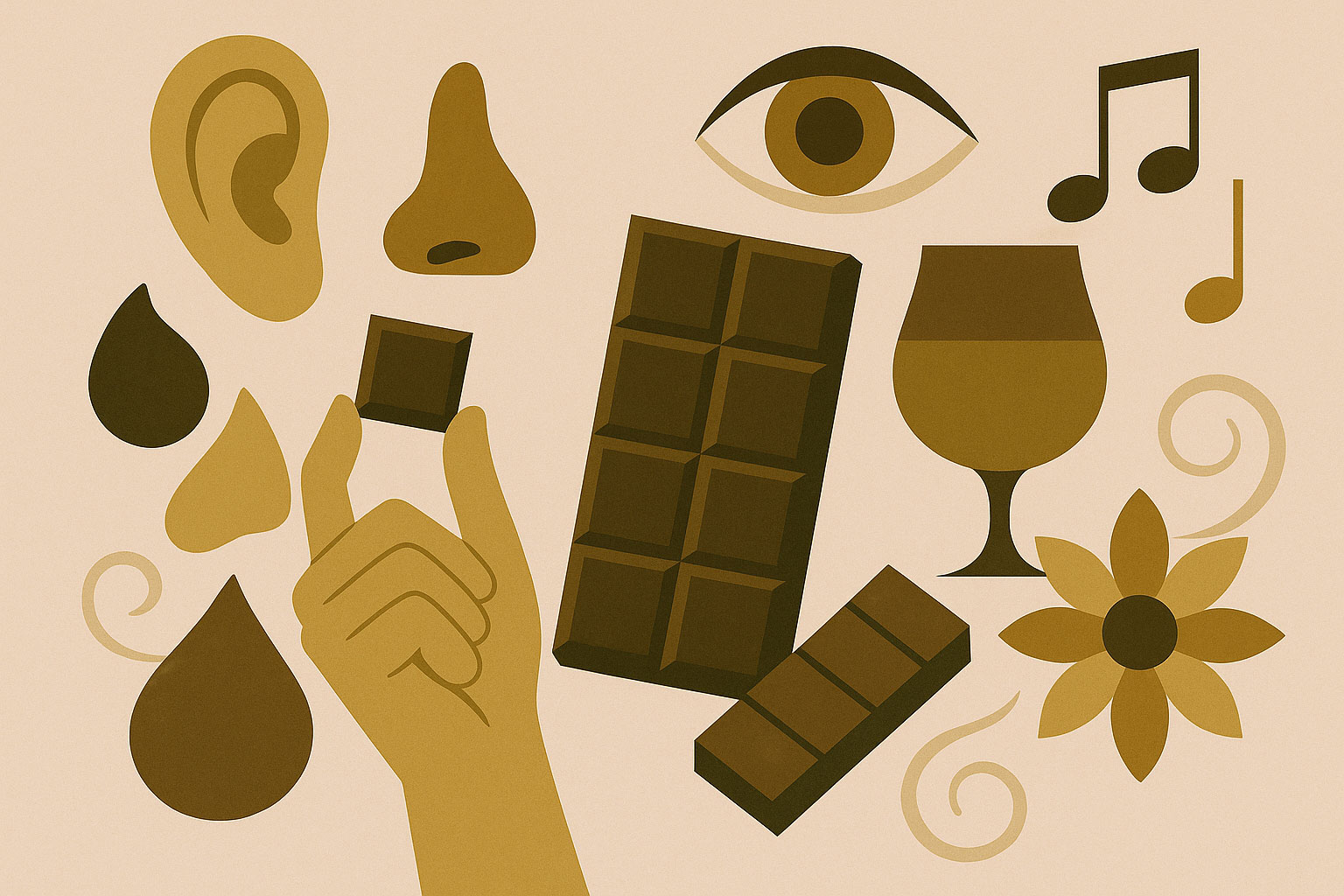
Tasting high-quality chocolate is more than snapping or melting, it’s a multisensory experience that engages sight, hearing, smell, touch, and of course, taste.
Activating these five senses allows the full richness of bean-to-bar chocolate to be revealed, its textures, aromas, and structure. Here’s how to taste mindfully and attentively.
1. Sight: Observe the Color and Surface
Before anything else, chocolate is observed.
A good chocolate bar presents a uniform color, depending on its origin and roasting. It can range from mahogany brown to almost black, sometimes with reddish or coppery hues.
Look at the gloss as well: a shiny surface indicates proper tempering. The bar should be smooth, free of grease spots or white marks (which would indicate fat or sugar bloom).
2. Hearing: Listen to the Snap
Snapping a piece of chocolate reveals precious clues about its structure:
– A sharp, clean snap usually signals successful tempering and proper crystallization.
– A dull, muted or uneven sound may suggest a higher fat content, low tasting temperature… or a deliberately unusual recipe.
At Orfève, certain bars, like those from our Brut de Noir collection, are intentionally rougher in texture, due to unrefined sugar. Others, such as our Noir de Fruits bars, are denser due to 200 grams of fresh fruit content (e.g. Noir de Noir).
The sound contributes to the tasting experience but must always be interpreted in light of the chocolatier’s intention.
3. Smell: Dry and Warm Aromas
Before tasting, bring the chocolate to your nose. Smell it dry, then rub it gently between your fingers to warm it up and release volatile aromas.
A fine origin chocolate may reveal floral, fruity, spicy, woody, tobacco, or nutty notes. Smell prepares the brain for taste by priming aromatic recognition.
4. Touch: Feel the Texture
Touch the chocolate, it should feel smooth, dense, not greasy, with a slow melt on skin contact.
Then, place it on your tongue without chewing. How it melts in the mouth will tell you everything about its structure:
– A good chocolate melts slowly,
– It releases its aromas in stages,
– Its texture is neither waxy, nor floury, nor sticky.
5. Taste: Explore the Flavor Palette
Finally, the taste. This goes far beyond sweet or bitter: a well-crafted chocolate reveals aromatic layers, sometimes over several minutes.
You may detect:
– a bright opening (acidic, fruity, floral),
– a rounder mid-palate (milky, biscuit, woody notes),
– a long finish (noble bitterness, dried fruit, gentle spice).
Breathe through your nose while it melts, this is retronasal olfaction, the key to full sensory tasting.
Orfève’s Approach
At Orfève, each bar is crafted to awaken all five senses, without artifice.
No added flavorings, no vanilla, no lecithin: only fine cacao, sugar, and a deliberate gesture.
Our bean-to-bar chocolates are made in our Geneva workshop from rigorously selected fine origin beans, offering a pure, coherent, and evolving experience.
We encourage slow, curious, respectful tasting, because it’s in full sensory listening that chocolate reveals its truth.