

The Cocoa Bean and Its Ecosystem
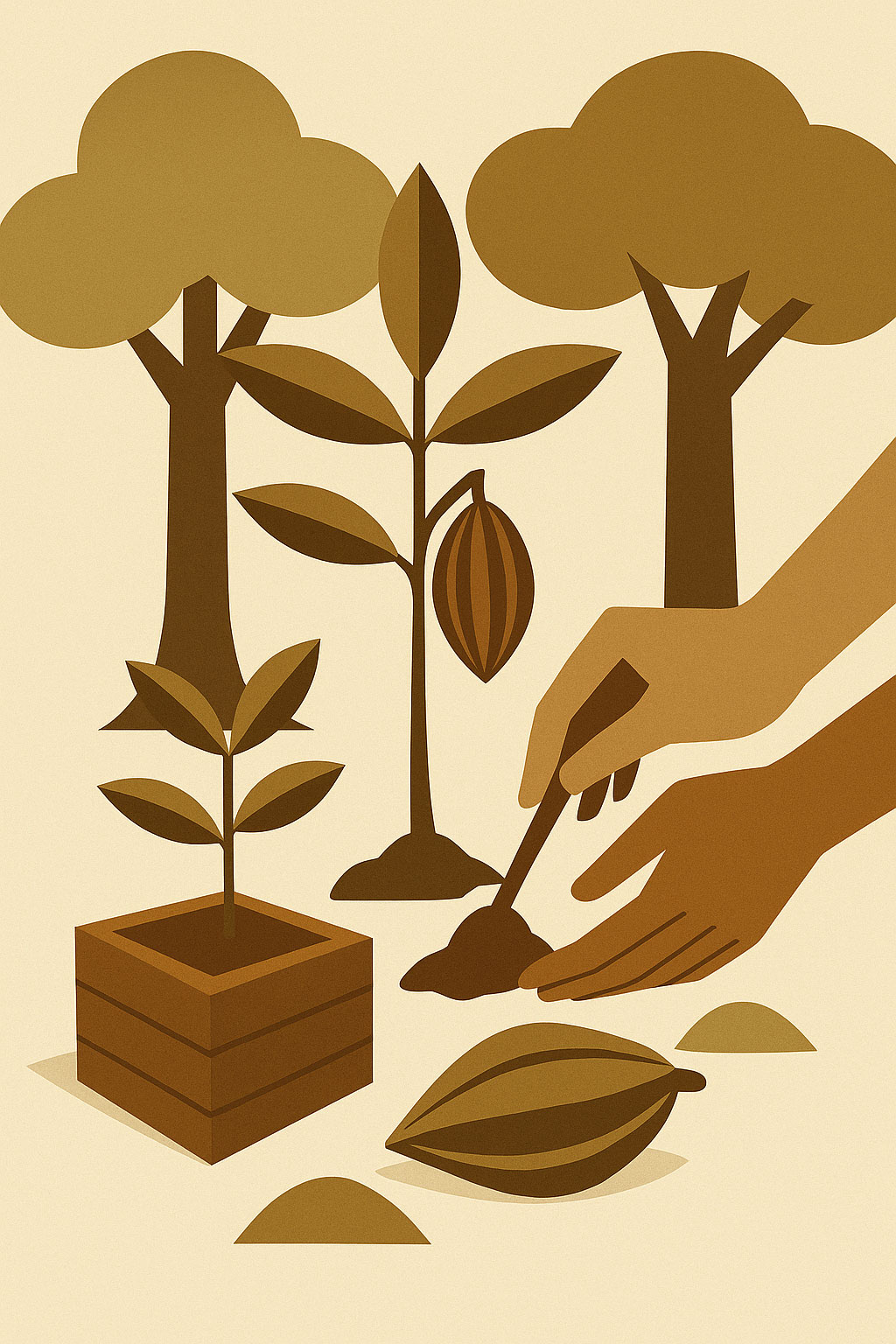
In the face of massive deforestation caused by certain intensive agricultural practices, cocoa can seem paradoxical: both a victim and a solution. When grown conventionally, cocoa has contributed to the loss of primary forests, especially in West Africa. But when cultivated within agroforestry systems, cocoa becomes an ally of biodiversity and reforestation.
Cocoa: A Shade-Loving Tree by Nature
Cacao is not a full-sun crop. Native to the tropical understory, it naturally grows in the shade of taller trees that shield it from drought, wind, and erosion. In its natural ecosystem, it coexists with a wide variety of forest species, tropical fruits, and medicinal plants.
Returning to this natural model is one of the most effective ways to restore ecosystems while cultivating high-quality cocoa.
Cocoa Agroforestry
Agroforestry involves planting cacao trees beneath a canopy of larger trees. These can be timber species (mahogany, albizia, teak), fruit trees (banana, avocado, mango), or nitrogen-fixing species (gliricidia, inga). This system offers numerous benefits:
-
Soil restoration: deep roots reduce erosion, improve water retention, and enrich the soil with organic matter.
-
Carbon sequestration: agroforestry systems capture more CO₂ than monocultures, contributing to climate mitigation.
-
Biodiversity: they provide habitats for a wide range of plant and animal species.
-
Resilience: trees protect cacao from climatic stress, extend its lifespan, and reduce the need for chemical inputs.
From Passive to Active Reforestation
There are various approaches to reforestation through cocoa:
-
Passive reforestation: native vegetation is allowed to regenerate around cacao trees, with minimal human intervention.
-
Active reforestation: deliberate planting of native tree species to rebuild forest cover, often supported by carbon offset programs or NGOs.
Some initiatives go further by reintroducing endemic species or creating ecological corridors between plots.
What Makes It Work
For cocoa to truly contribute to reforestation, certain conditions must be met:
-
Fair pricing for farmers, enabling them to invest in long-term practices.
-
Technical support to select appropriate tree species, structure plantations, and ensure harmonious species coexistence.
-
Value-chain recognition, rewarding agroforestry-grown cocoa both for its quality and environmental impact.
Orfève’s Approach
At Orfève, we prioritize beans sourced from supply chains engaged in responsible agroforestry practices. Through our sourcing partners, we collaborate with plantations where cocoa is grown in harmony with the forest and its ecosystems. For us, reforesting is not just about planting trees, it’s about restoring living, complex, and enduring environments.