

The Cocoa Bean and Its Ecosystem
Often associated with indulgence, chocolate is also an agricultural product whose production raises significant environmental concerns. From cocoa cultivation to chocolate bar manufacturing, each stage of the process impacts natural resources, biodiversity, and the climate. Understanding these issues helps consumers and producers make more informed choices.
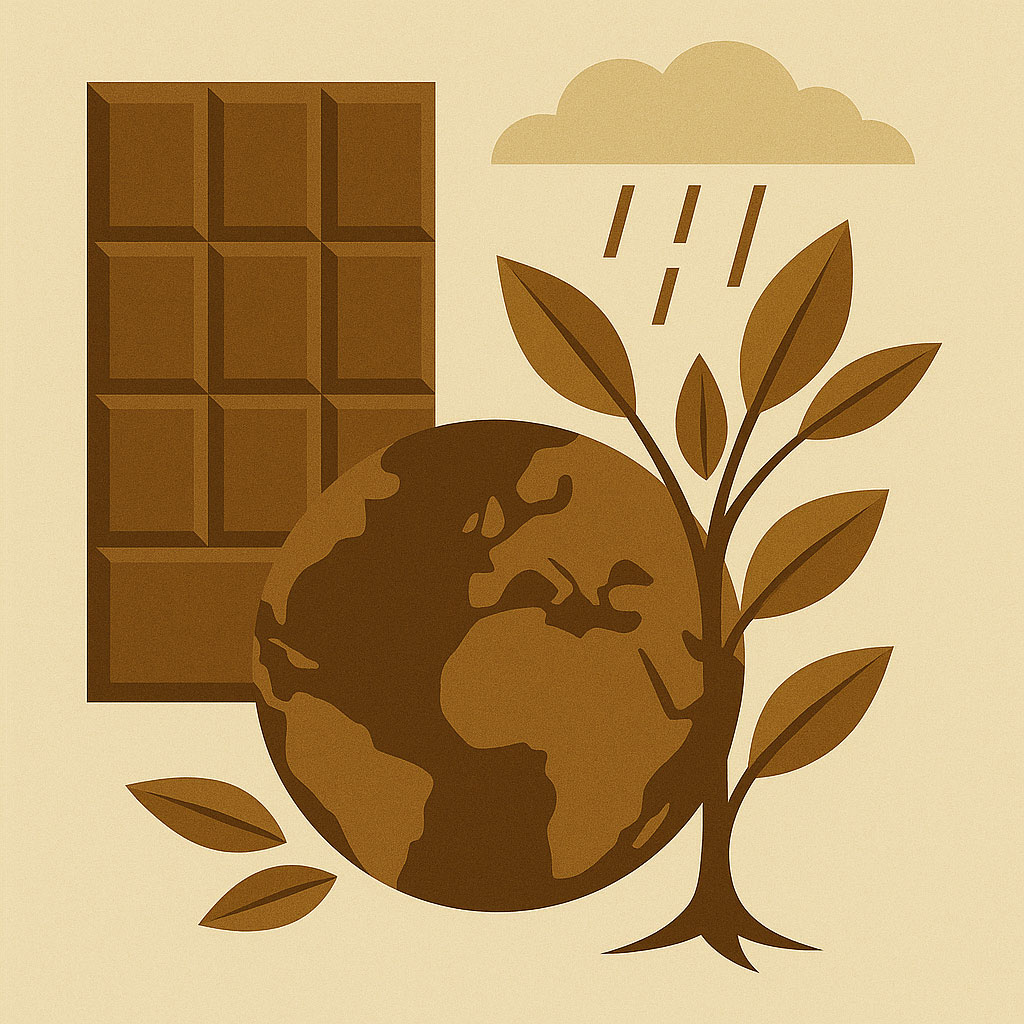
Cocoa Cultivation: Between Deforestation Pressure and Reforestation Potential
The main raw material in chocolate, cocoa, is grown in tropical regions vulnerable to deforestation. The expansion of conventional cocoa plantations has led to the disappearance of many primary forests, especially in West Africa and Latin America. Intensive monoculture, often relying on high-yield hybrid varieties, depletes the soil, reduces biodiversity, and accelerates erosion.
But another path exists: cocoa cultivated through agroforestry, under forest canopy and in harmony with the ecosystem. This model regenerates soils, captures carbon, reduces pesticide use, and restores plant diversity. When properly implemented, cocoa can even become a tool for reforestation.
Processing and Logistics: Key Areas to Monitor
Turning cocoa into chocolate, through fermentation, drying, transport, roasting, conching, and packaging, consumes energy and resources at each stage. Depending on the production model, the impact can vary:
-
Intercontinental transport (from producing countries to Europe, North America, or Asia) increases the carbon footprint.
-
Intensive industrial processes, especially high-temperature roasting, are energy-intensive.
-
The use of unsustainable raw materials worsens the product’s overall environmental impact.
Conversely, a bean-to-bar chocolate with no additives and streamlined energy consumption significantly reduces its footprint.
Packaging and Waste
Packaging also plays a critical role. Multi-layered plastics that are difficult to recycle remain common in the chocolate industry. Committed brands are shifting toward recyclable or biodegradable materials such as paper, FSC-certified cardboard, or plant-based inks.
Finally, waste reduction applies to both production and consumption. Offering adapted formats, optimizing shelf life, and valuing the product appropriately all help limit loss.
Orfève’s Approach
At Orfève, we believe that a great chocolate is also a responsible one. That’s why we work with committed sourcing partners in terroirs where cocoa is grown through agroforestry, and fermented and dried at origin with respect for resources.
Our Geneva-based manufacture favors short supply chains and energy efficiency, supported by integrated solar power. We craft pure recipes with no additives and use sustainable packaging. Because every detail counts in building a fairer chocolate, for the planet and for those who cultivate it.