

The Cocoa Bean and Its Ecosystem
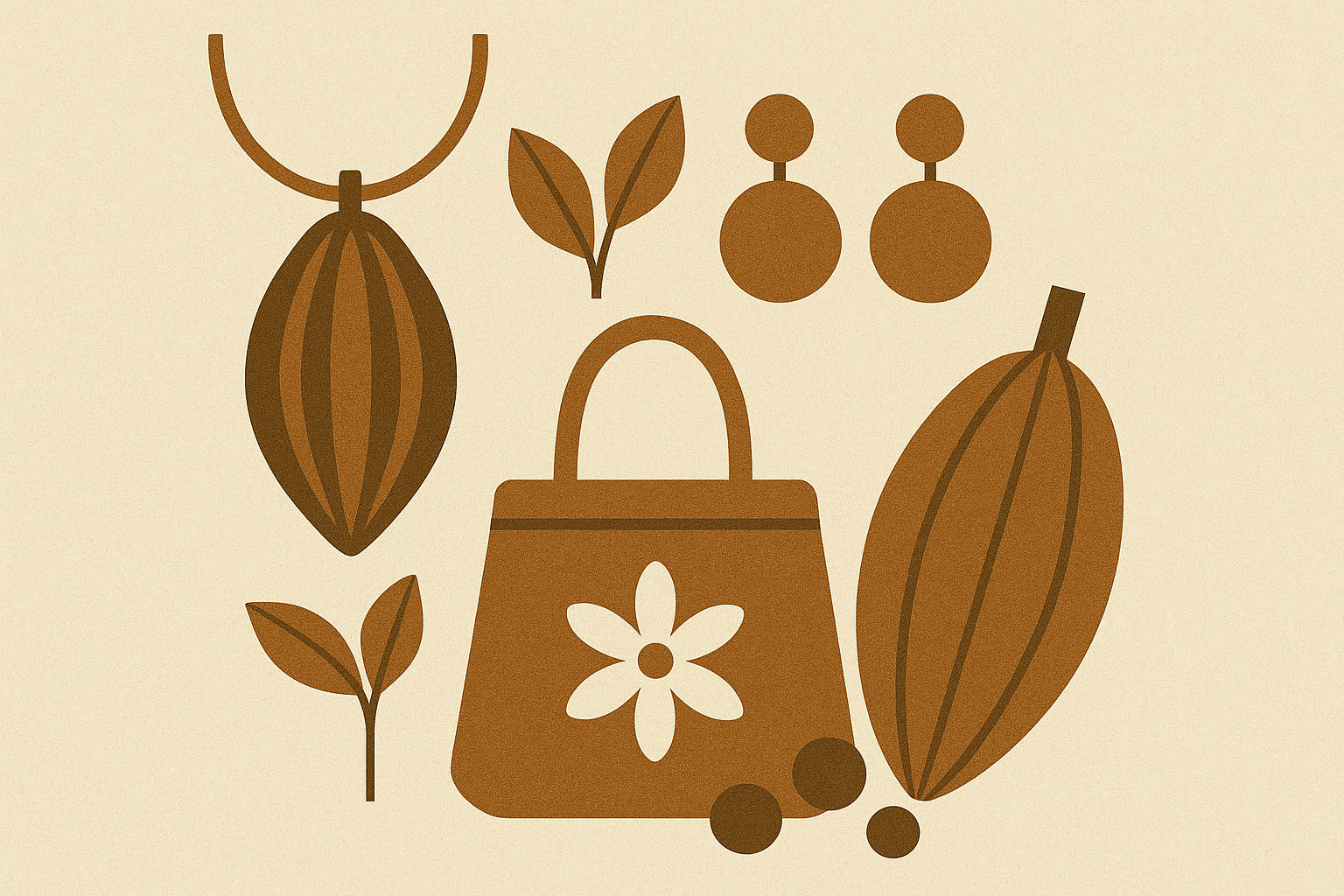
Far beyond the chocolate bar, cocoa is also an artistic raw material. In several parts of the world, notably Latin America, West Africa, and the Caribbean, cocoa husks and pods are collected and transformed into decorative or practical objects. A clever way to repurpose the entire fruit… and extend its cultural significance.
A Second Life for the Pod
-
In Ghana and Côte d’Ivoire, artisan cooperatives gather dried cocoa husks to craft jewelry, buttons, necklaces, and locally inspired design pieces. These creations, often sold in markets or through fair trade channels, help rural communities diversify their income.
-
In Peru and Ecuador, hollowed cocoa pods are sometimes used as containers, musical instruments, or even lamps and sculpted objects intended for tourists or local craft markets. These skills are often passed down through generations.
-
In Caribbean islands like Grenada and Saint Lucia, some artisan workshops transform cocoa shells into souvenirs: sculptures, jewelry, and decorative items that celebrate local agricultural heritage.
A Cultural and Sustainable Practice
Beyond their aesthetic appeal, these practices allow for better economic valorization of cocoa, especially for farmers and artisans who don’t rely solely on the beans. They also contribute to reducing agricultural waste by giving functional value to materials often seen as by-products.
Even more importantly, they reinforce cocoa’s presence in the daily and cultural life of producing regions. The fruit becomes a vector of identity, local pride, and artisanal innovation.