

Understanding Cocoa
Before it’s chocolate, cocoa is a fruit. And not just any fruit: the cocoa pod.
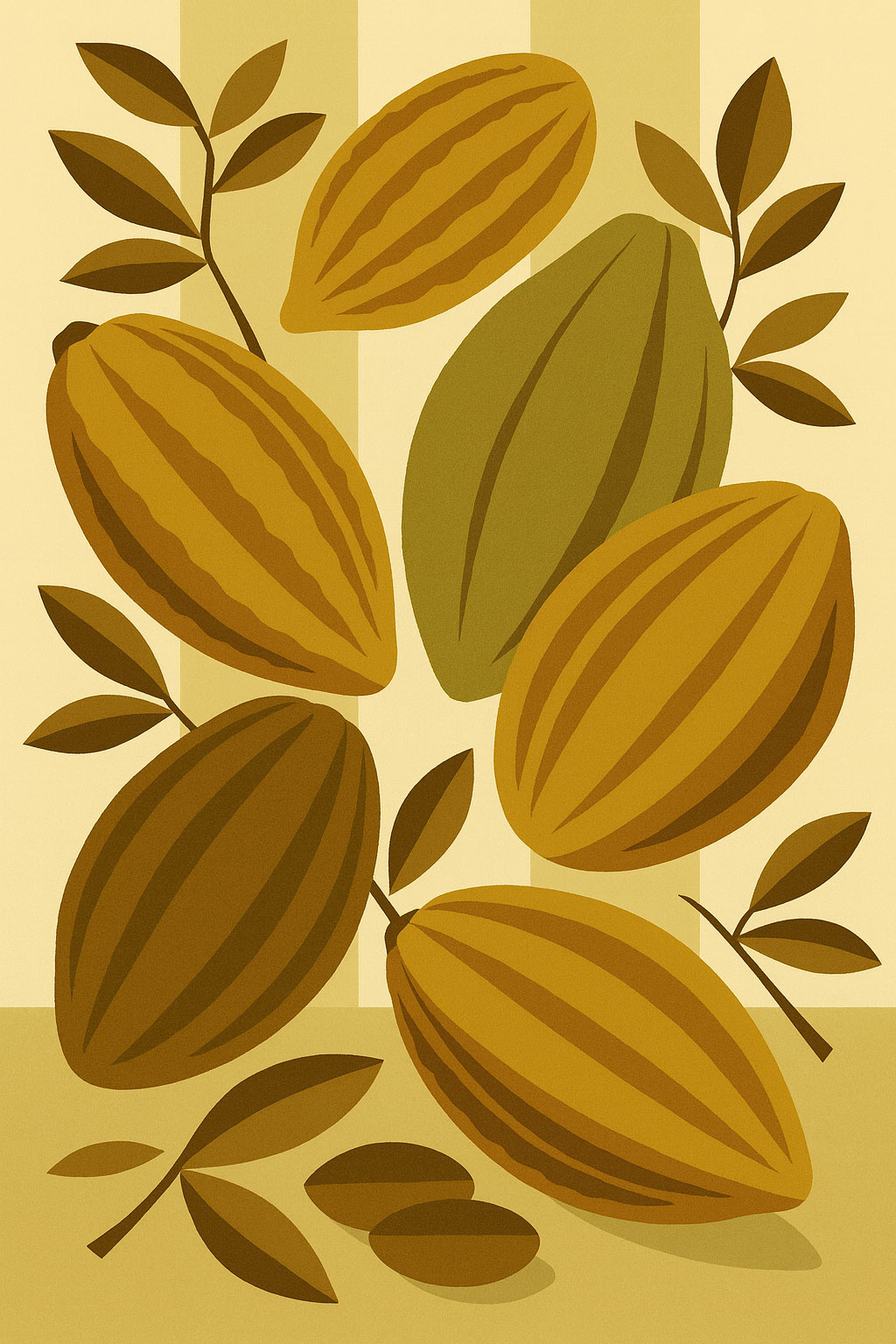
Clinging directly to the trunk or branches of the cacao tree (Theobroma cacao), it intrigues with its oval shape, rough skin, and hues that range from green to red, yellow, or orange depending on the variety and ripeness.
A surprising fruit
Each pod contains 30 to 50 cocoa beans, nestled in a sweet, tangy white pulp,a pulp often tasted fresh in producing countries.
This pulp is essential: during fermentation, it kickstarts the aromatic development of the beans.
A brief life once harvested
Once picked, a pod must be opened quickly.
Within just a few hours, the pulp begins to ferment naturally.
But if the pod remains sealed too long, it dries in place and the beans become unusable.
That’s why the window between harvest and fermentation is so critical: every minute counts.
An invisible yet decisive transformation
After the pod is opened, the beans are extracted and exposed to air, allowing fermentation to begin.
This stage chemically transforms the inner bean, strips away its vegetal taste, and lays the foundation for the complex flavors that will later be revealed during roasting.
A modest fruit with immense value
The cocoa pod is both ephemeral and foundational.
It lasts only a few days once ripe, can’t be transported, and varies in appearance from tree to tree.
And yet, it holds the entire potential of chocolate in its fragile form.
Orfève’s Approach
At Orfève, we see each pod as a microcosm,the starting point of a taste, an origin, a story.
We never forget that flavor begins long before our workshop:
in the precise, deliberate gestures of those who harvest, open, ferment, and care for the beans from the moment they leave the pod.