

Choosing and Understanding Your Chocolate
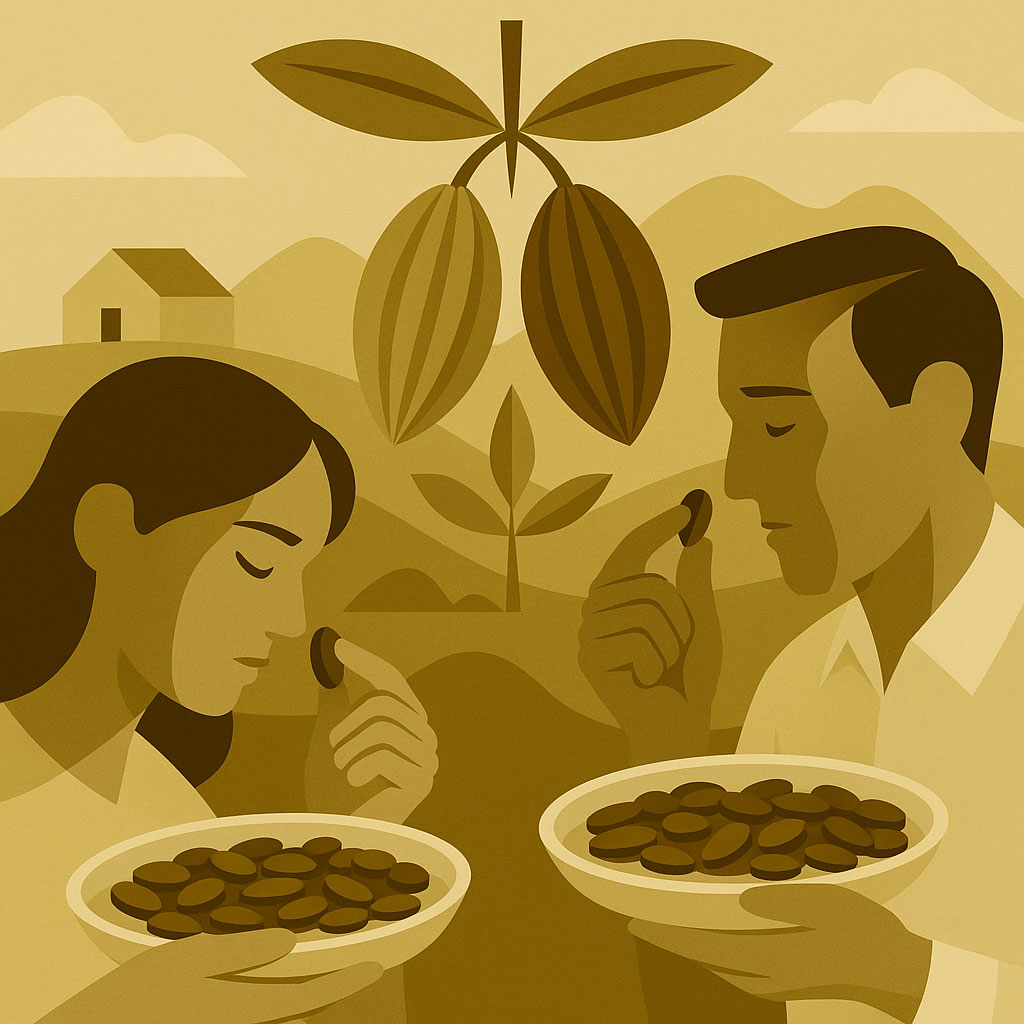
The answer is yes, but only if the chocolate is properly made.
Like wine, cocoa is a product of origin. The flavor of a cocoa bean depends on many factors: variety, microclimate, altitude, soil type, cultivation methods, fermentation, drying… and the craftsmanship of the chocolate maker. Every terroir leaves its mark.
For example, a Trinitario from Madagascar (tangy, fruity, almost tonic) tastes completely different from a Gran Blancofrom Peru (more floral, rounder). Even two beans from Peru, like native Nacional and Chuncho, grown in different terroirs, offer radically distinct aromatic profiles.
This is not just marketing, it’s a real sensory difference, perceptible even in blind tasting by a trained palate.
However, this expression of terroir can only emerge if nothing gets in the way: added flavorings, lecithin, excessive sugar, or over-roasting. That’s why most industrial chocolate bars have a relatively uniform flavor, regardless of the origin on the label. Terroir only shines through if the entire supply chain is built to preserve it.
Orfève’s Approach
At Orfève, we process each fine cocoa variety and origin separately, with tailored settings at every step: roasting, conching, cocoa butter ratio… everything is adjusted to highlight the natural character of the bean.
We don’t blend origins. We don’t aim for consistency.
We aim for authenticity.
It’s this artisan, precise, and transparent approach that allows each terroir to speak for itself.