

The Secrets of Chocolate making
At first glance, all chocolate bars might seem to follow the same process. And yet, between dark, milk, and white chocolate, the ingredients, balances, and sometimes even the manufacturing goals differ significantly. Here’s why.
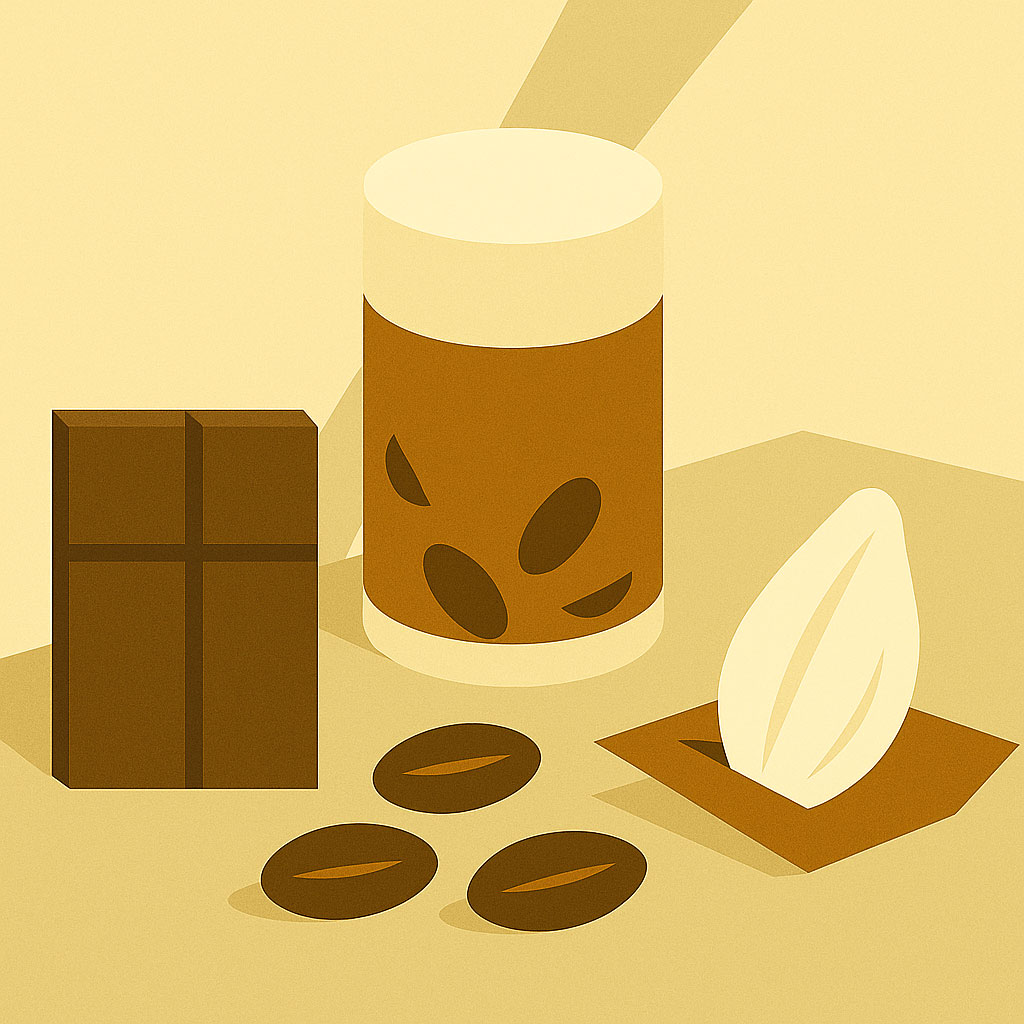
Dark Chocolate: The Purest Expression of Cacao
Dark chocolate contains only ingredients derived from cacao,cocoa liquor (and sometimes cocoa butter) and sugar. There are no dairy additions.
It’s the closest to the cacao’s botanical origin and requires the highest level of precision:
– No added flavors to cover flaws,
– No secondary fats to smooth things out.
Its quality depends entirely on:
– Bean selection,
– Precision in roasting, grinding, and conching,
– The right balance between dry matter and cocoa butter.
In industrial chocolate, however, it’s common to find:
-
Vanilla or vanillin to mask bitterness or flaws,
-
Lecithin to improve fluidity cheaply,
-
Even animal fats like butter to soften texture.
These additions make it easier to work with low-grade cacao and ensure consistent batches, but at the cost of transparency and authentic flavor.
So while industrial dark chocolate hides, well-crafted artisan dark chocolate reveals.
Milk Chocolate: A Swiss Invention Turned Global Standard
Milk chocolate adds milk powder (or condensed milk) to the cacao and sugar mix, along with a higher proportion of cocoa butter.
The milk:
– Softens the cacao’s bitterness,
– Adds roundness and melt-in-mouth texture,
– Brings in flavors ranging from caramelized to toasty, depending on the method used.
The complexity lies in the precise ratio of ingredients and the quality of the milk.
See also: How is milk chocolate made?
White Chocolate: No Cocoa Solids, But High in Cocoa Butter
White chocolate is often seen as “not real chocolate” because it contains no cocoa solids (nibs or liquor). It consists solely of:
-
cocoa butter
-
sugar
-
milk powder (or equivalent)
If made well, with pure and well-treated cocoa butter, it can offer a silky texture and subtle floral or creamy notes. But in mass production, it’s often overloaded with vanilla flavorings or substitute fats.
See also: Is white chocolate really chocolate?
Orfève’s Approach
At Orfève, dark chocolate and milk chocolate are two different expressions of the same approach to cacao. In both cases, our work is guided by the selection of ingredients, the balance of each recipe, and the mastery of every stage of production, from bean to bar.
In our dark chocolates, cacao expresses itself without milk, through deliberately pared-back recipes that highlight the identity of each origin. With our Noir de Lait collection, milk becomes an ingredient in its own right: Swiss milk from Geneva, combined with fine cacao in three different balances of 41%, 47%, and 53% cacao. Two families of chocolate, two expressions of cacao, crafted with the same exacting standards.
As for white chocolate, it is not yet part of our collections. But since we press our own cocoa butter in our manufacture, the essential raw material is already in our hands.
So, who knows what might already be waiting in our drawers?