

Understanding Cocoa
The quality of great chocolate begins long before the transformation stage. Much of it depends on the farmer’s gestures, right at the moment of harvest.
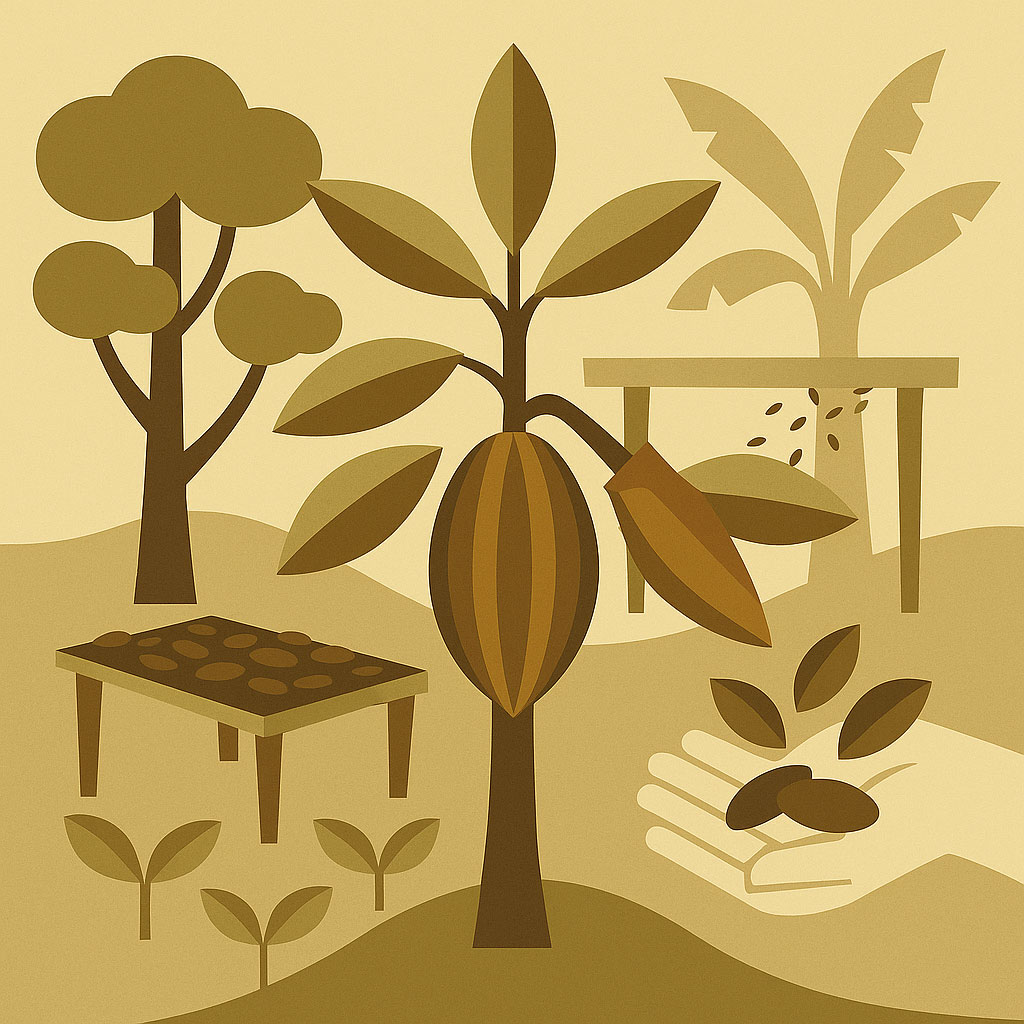
A Fruit That Must Be Ripe, Not Before
Cocoa pods do not ripen after being picked. Unlike many fruits, they must be harvested at the right moment: not too early (underdeveloped, low-aroma beans), not too late (risk of germination or contamination).
This “right moment” varies depending on the variety, the season, the weather, and the terroir. It can be detected by the pod’s color, the sound it makes when tapped, sometimes even by the texture of its skin. Harvesting requires close observation, trained eyes, and transmitted know-how.
A Manual Harvest: Precise and Respectful
Cocoa harvesting is almost always done entirely by hand. Farmers use a pod cutter or machete, carefully handled to avoid damaging the trunk or young shoots. A poorly executed cut can jeopardize the next flowering.
After harvest, the pods are opened manually, often with nothing more than a stick. The beans must then be removed delicately to avoid damaging the pulp, which plays a key role in fermentation.
Why Does It Matter So Much?
A rushed or careless harvest undermines the entire quality chain. Immature or damaged beans ferment poorly, dry unevenly, and result in chocolate that is unbalanced, often bitter, acidic, or dull.
In other words: no great chocolate without a great harvest.
Orfève’s Approach
At Orfève, we pay particular attention to this first step. Through our partnerships with rigorous sourcers, we work with farmers trained in careful, reasoned harvesting, selecting only ripe pods, opening them gently, and sorting the beans before fermentation.
Because flavor starts at harvest.