

The Ingredients of Chocolate, Explained
Often seen as a “sweeter version” of dark chocolate, milk chocolate is in fact a category of its own, with distinct aromatic, textural, and nutritional characteristics. And milk plays a key role in shaping them.
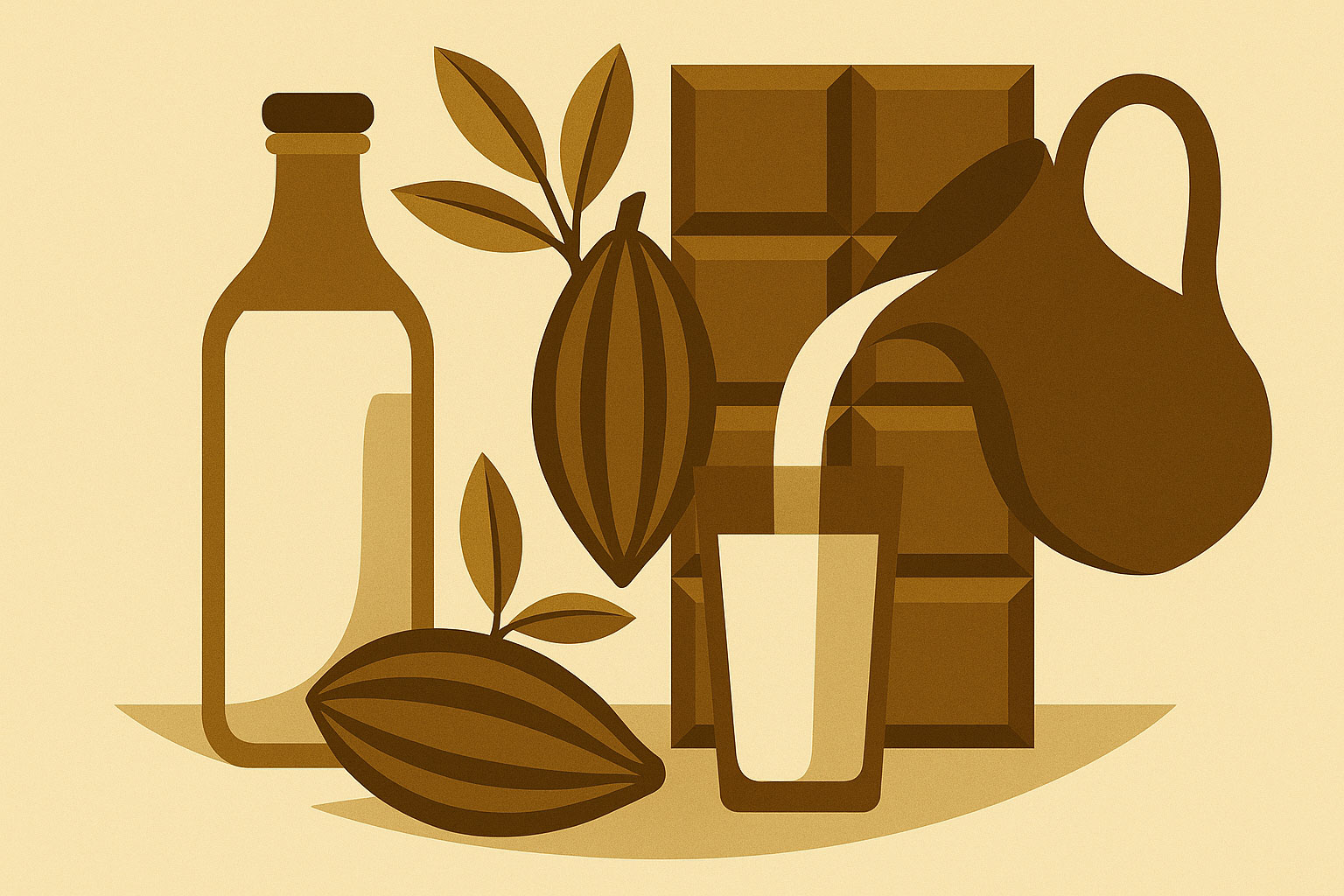
A Swiss invention… that conquered the world
Milk chocolate was invented in Switzerland at the end of the 19th century. By combining condensed milk (later milk powder) with cocoa and sugar, Swiss pioneers created a softer, less bitter product,more accessible to a broader public. This innovation would go on to transform the global chocolate market.
Milk: a technical and aromatic ingredient
In a milk chocolate bar, milk brings:
-
A smoother texture: its proteins and fats contribute to the melt-in-mouth feel and creamy sensation.
-
A rounder flavor: milk reduces cocoa’s acidity and adds milky, caramel, or even biscuity notes depending on its origin and processing.
-
A natural sweetening effect: lactose,the natural sugar in milk,enhances sweetness and can allow for reduced added sugar.
However, milk can also mute the nuanced notes of fine cacao if it’s too dominant. Balance is key.
What kind of milk?
Different types of milk are used in chocolate:
-
Whole milk powder (most common): adds richness and a round mouthfeel.
-
Skimmed milk powder: lower in fat, but also less creamy.
-
Caramelized or malted milk powder: heated at high temperature before drying, it develops a stronger flavor profile, often used in “vintage” style chocolates.
Other variations include plant-based milks (oat, rice, almond, coconut…) to meet specific dietary needs,but these significantly alter the texture and flavor.
Orfève’s Approach
At Orfève, milk chocolate is not conceived as a sweeter or softer alternative to dark chocolate. It is a different way of exploring cacao.
Our Noir de Lait collection was developed around this idea. Each recipe combines fine cacao with Swiss milk from Geneva, while maintaining a high cacao content and a deliberately restrained sweetness.
The collection explores three different balances, 41%, 47%, and 53% cacao, allowing the relationship between cacao and milk to evolve from one chocolate to another. As the cacao content increases, the milk becomes more discreet, while the aromatic identity of the beans becomes increasingly pronounced.
Rather than masking cacao, milk becomes another ingredient through which its character can be expressed: bringing roundness, texture, and softness while preserving complexity and length.
The result is our interpretation of milk chocolate: less about sweetness, more about balance.