

A bit of History
Behind the sweetness of a chocolate bar often lies a more bitter story.
The global development of cacao is deeply tied to the major episodes, and the darkest legacies,of colonization. It’s a historical reality that the chocolate industry is only beginning to fully confront.
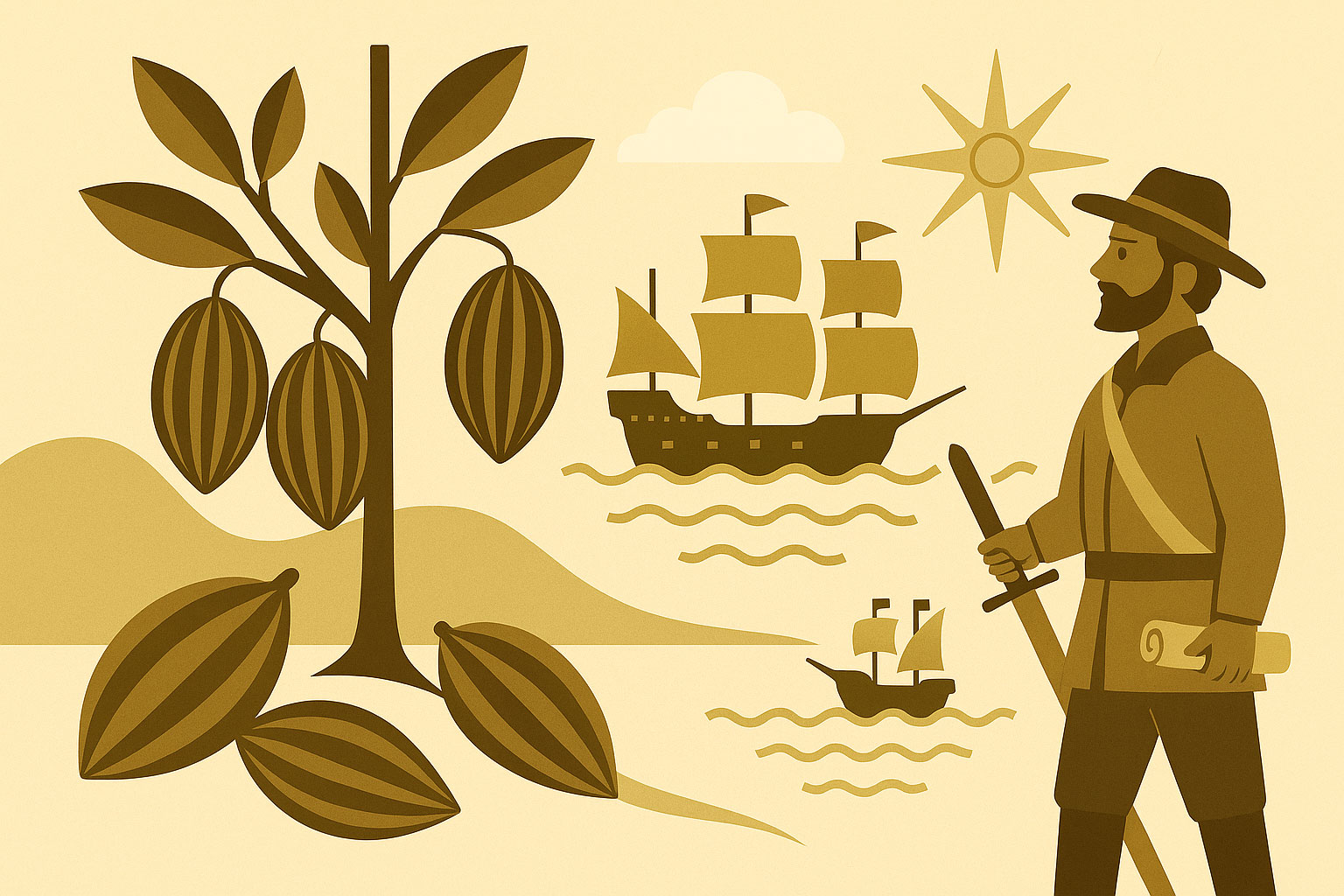
A Pre-Columbian Plant Turned Colonial Resource
Before the arrival of Europeans, cacao was a ritual and social plant at the heart of Mesoamerican civilizations. Among the Mayas and Aztecs, it served as sacred drink, currency, and offering.
But from the 16th century onward, following the Spanish conquest, cacao changed status. It shifted from sacred good to commercial commodity.
First cultivated in colonies across Central and South America, it was then introduced to other tropical regions to meet the growing demand from European markets.
An Expansion Built on Slavery
From the 17th to the 19th century, cacao cultivation was inseparable from the transatlantic slave trade. In West Africa, the Caribbean, and South America, cacao plantations relied on the forced labor of enslaved Africans.
Even after the official abolition of slavery, forms of exploitation persisted:
– meager wages,
– child labor,
– extreme economic dependence.
This structural violence became embedded in the cacao value chain… and still echoes today.
A Legacy That’s Still Visible
Cacao remains a low-income raw material, grown by millions of small-scale farmers, mainly in West Africa, often under precarious conditions.
The world’s major chocolate corporations, indirect heirs to this colonial history, still dominate a market in which only a tiny share of value reaches the producers.
The link between colonial history and present-day imbalances is not a distant memory, but an ongoing reality.
Orfève’s Approach
At Orfève, we do not claim to rewrite history, nor do we wish to erase its traces.
We work with committed cooperatives and growers, along fully traceable supply chains, and at prices well above global market rates.
Not for virtue signaling, but because it matters, for the preservation of nature, and above all, for respect of the human beings behind the product.
Behind every bar, there is a choice: A choice for a different story.
Less silent. More conscious. And committed to lasting change.