

The Ingredients of Chocolate, Explained
In recent years, chocolate has drawn increased attention regarding the presence of potential contaminants, especially cadmium. This heavy metal, naturally found in soil, can accumulate in cacao beans, with significant variations depending on origin, terroir, and agricultural practices.
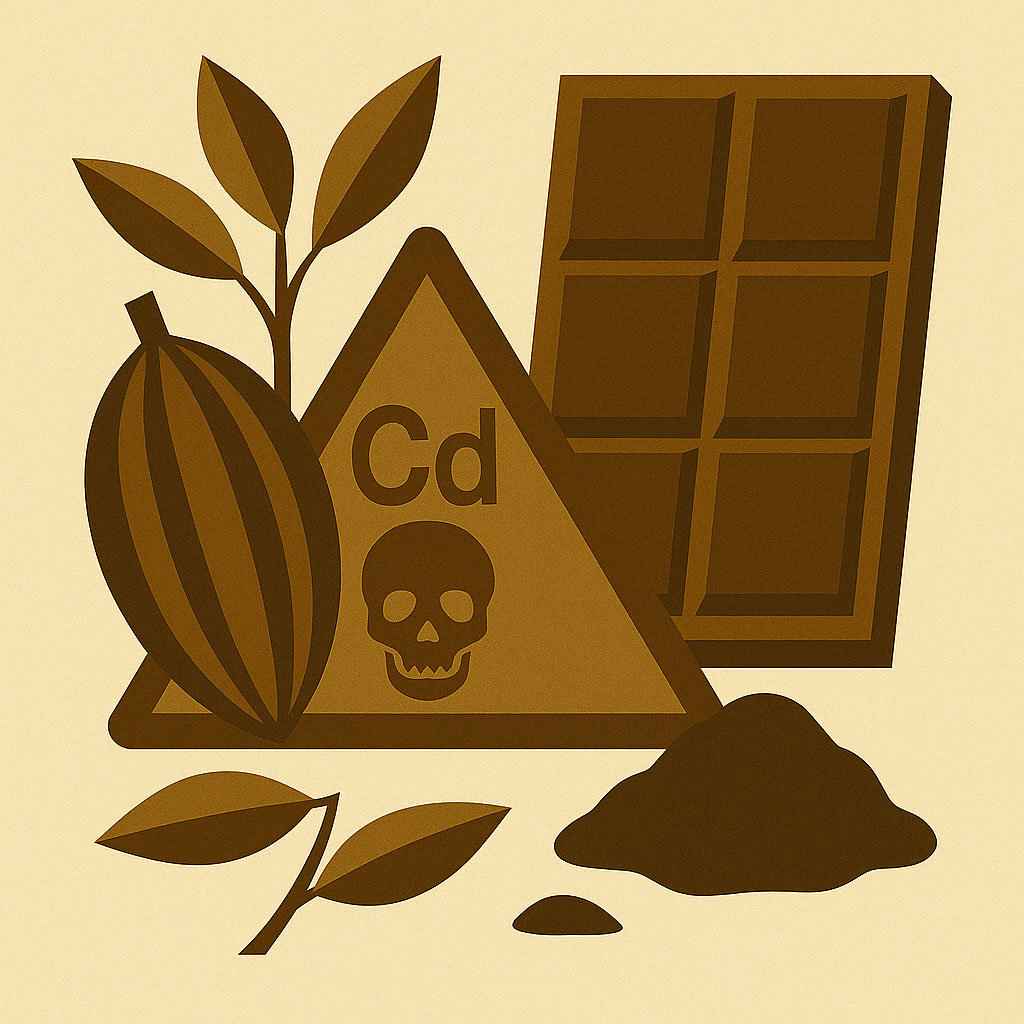
What is cadmium, and why is it a concern?
Cadmium is a naturally occurring chemical element, but its toxicity is well established when ingested in large quantities over time. It can negatively impact:
-
Kidney function
-
Bone health (through demineralization)
-
Long-term cancer risk
The EFSA (European Food Safety Authority) has set a Tolerable Weekly Intake (TWI) of 2.5 micrograms of cadmium per kilogram of body weight.
In chocolate, cadmium is not the result of any industrial additive. It is absorbed naturally by the roots of the cacao tree from mineral-rich soils, especially in volcanic regions. The beans then store cadmium within their plant tissue.
Is eating chocolate a health risk?
Since 2019, the European Union has imposed strict regulatory limits on cadmium content in cacao products:
-
Between 0.1 and 0.8 mg/kg, depending on the cocoa content and product category (milk chocolate, dark chocolate, cocoa powder, etc.)
In practice, most European chocolate complies with these limits, particularly when made from carefully sourced and traceable beans.
Risk factors increase when:
-
Beans originate from regions with naturally high cadmium levels (e.g., parts of the Andes)
-
The chocolate has a very high cocoa content (80–100%)
-
Consumption is excessive and long-term (dozens of grams per day)
For normal consumption, high-quality artisanal dark chocolate poses no health risk to the general population.
How does Orfève address this issue?
At Orfève, we systematically test our beans from origins considered at potential risk.
We only select lots that fully comply with the strictest European regulations and give preference to terroirs with naturally low cadmium content or where farming practices effectively mitigate its uptake (e.g., low-accumulating varieties, soil pH control, etc.).
We believe that food safety is an integral part of our quality standards,alongside taste, traceability, and fair compensation for growers.