

The Cocoa Bean and Its Ecosystem
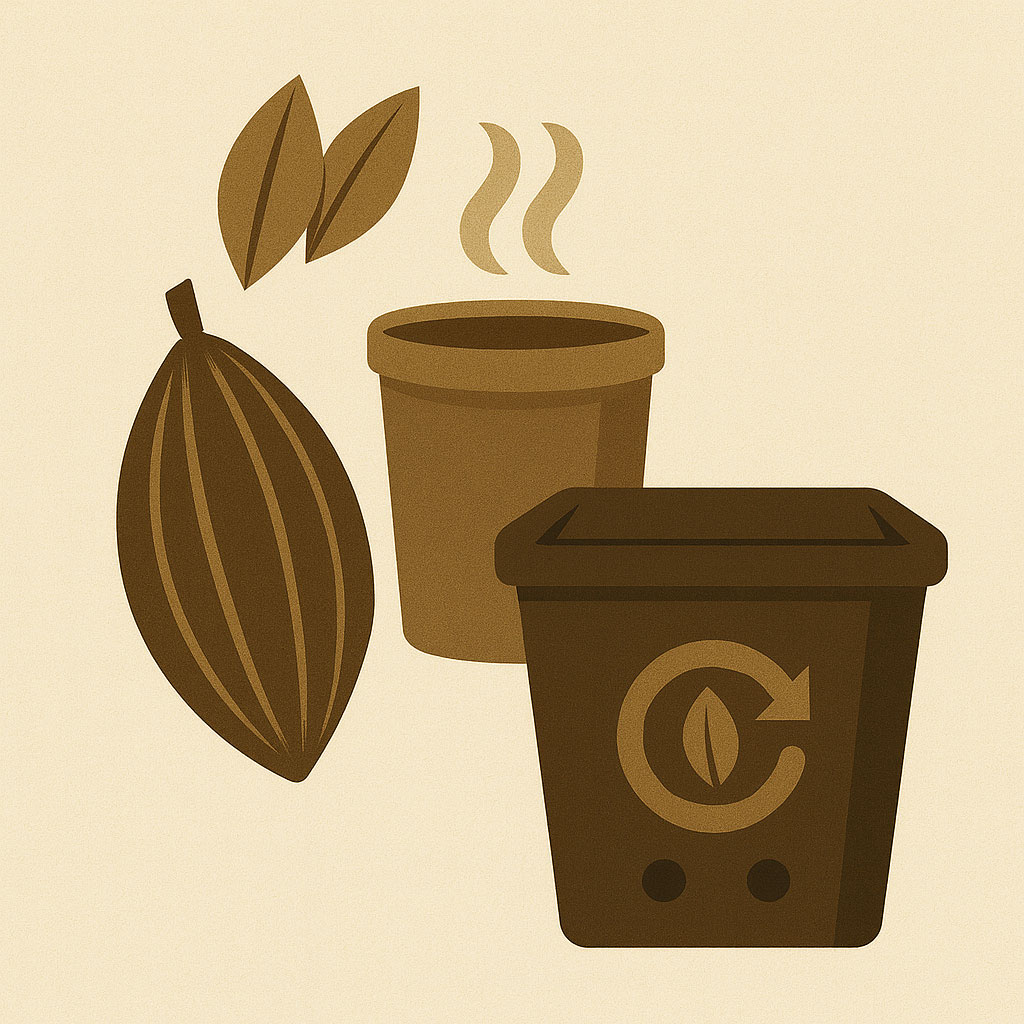
When we think about chocolate production, we rarely consider the amount of plant waste generated by cocoa. Yet at every stage, from harvest to processing, cocoa produces by-products that can account for up to 90% of the pod’s volume. Long regarded as waste, these residues are now central to a circular economy approach.
Waste? No, Resources to Be Repurposed
The main cocoa by-products include:
-
empty cocoa pods, after bean extraction,
-
residual pulp, often discarded if not processed,
-
cocoa bean husks, removed during post-roasting winnowing,
-
grinding fines, cocoa dust that cannot be used in chocolate production.
These elements were once thrown away or left to decompose. Today, many agricultural, artisanal, and industrial initiatives are giving them a second life.
Compost, Biomass, Materials: Multiple Uses
-
On plantations, cocoa pods are often crushed to enrich soils with organic matter (compost) or used as mulch to retain moisture.
-
Cocoa bean husks, rich in fiber and theobromine, are used:
-
for herbal cocoa teas,
-
as horticultural mulch,
-
or as biomass fuel (local combustion).
-
-
Pulp, sweet and aromatic, can be transformed into:
-
juice or fermentation agents for the food industry,
-
or artisanal alcohol in producing countries.
-
-
Grinding fines are sometimes incorporated into bioplastics, cosmetics, or composite materials.
This logic aims to close the loop, reduce waste, and make cocoa a model sector in circular agriculture.
Cocoa as a Material for Innovation
Some pilot projects are exploring how to turn cocoa waste into:
-
insulating bricks or bio-based panels,
-
raw material for artisanal paper or sustainable fashion,
-
antioxidant extracts used in pharmaceuticals or food preservation.
The long-term goal? Zero-waste chocolate, where every part of the plant has a purpose, whether locally or internationally.
Orfève’s Approach
At Orfève, we transform cocoa beans without additives or texture agents. We also produce natural cocoa powder by pressing the defatted part of the bean, to honor the whole fruit. Our sourcing partners are also committed to repurposing by-products locally, whether to fertilize plantations, enrich soils, or support local artisanal activities. Because great chocolate begins with full respect for the raw material.