

Small Truths About Chocolate
Dark chocolate is often seen as a “grown-up” taste: intense, bitter, and complex.
Yet more and more parents are wondering whether dark chocolate might be a better option for children than overly sweet products. A good idea,or too much too soon? Here’s what you need to know to make an informed choice.
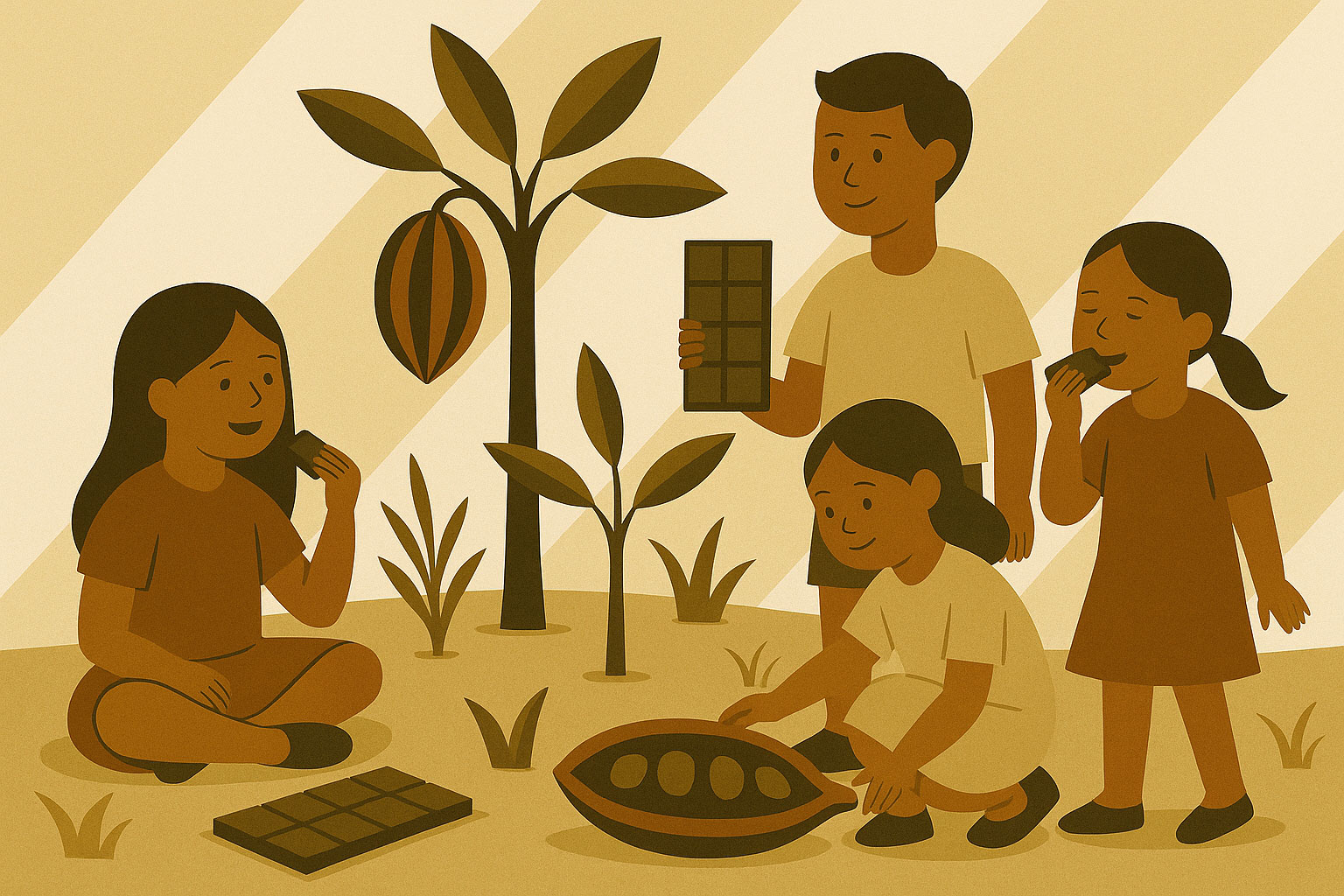
A Plant-Based Food… But Concentrated
Dark chocolate comes from cacao, a seed naturally rich in magnesium, iron, antioxidants, and theobromine. For children, it may offer some interesting benefits:
– gentle stimulation without excess caffeine,
– lower sugar content than most milk chocolates,
– a satiating effect that helps reduce unnecessary snacking.
That said, dark chocolate is still a concentrated food. It should be offered in portions adapted to the child’s age, temperament, and sensitivity.
From What Age Can It Be Introduced?
Generally, dark chocolate can be introduced from around age 3, under certain conditions:
– avoid hard inclusions (like nibs or whole nuts) in younger children,
– observe the child’s digestive and taste reactions.
Between ages 3 and 6, children are still quite sensitive to bitterness. It’s best to choose a smoother dark chocolate with low acidity and avoid overly intense or tannic profiles.
A Smarter Alternative to Sugary Products
Unlike candy bars, spreads, or industrial sweets, a quality dark chocolate:
– contains few ingredients,
– offers a more structured flavor profile,
– satisfies chocolate cravings with less quantity.
Introduced in a calm environment, with a message focused on quality and taste discovery, dark chocolate can become a healthier and more mindful reference, far removed from sugar-based habits.
Orfève’s Approach
At Orfève, our dark chocolate bars are made with fine origin cacao beans, cocoa butter, and raw or whole cane sugar,with no added flavorings, no lecithin, and no additives.
This makes them naturally richer in flavor and easier to introduce to curious children or those raised with a focus on high-quality food.
We recommend starting with milder recipes, in small portions, and always as a shared discovery. Because taste, like reading, is learned early,and it grows over time.