

The Cocoa Bean and Its Ecosystem
Growing cocoa can be a powerful tool for preserving biodiversity, provided we move away from intensive farming and adopt agricultural practices that respect ecosystems.
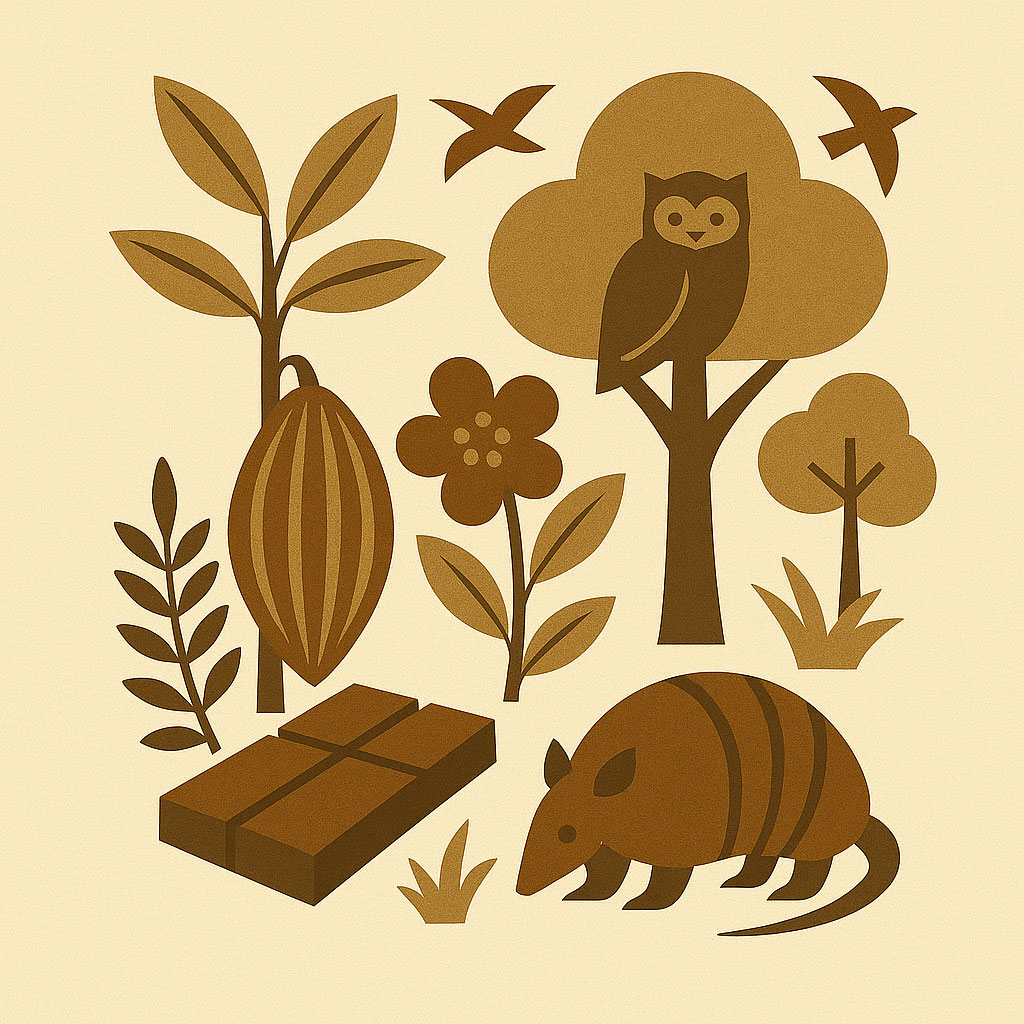
A Rich Ecosystem: When Cocoa Cultivation Embraces Nature
Unlike industrial monocultures, cocoa plantations cultivated in agroforestry systems blend into diverse natural environments. These systems often feature shade trees (banana, avocado, coconut, etc.), a tall canopy, a shrub layer, and ground cover vegetation. This type of setup creates a stable microclimate that shields cocoa trees from water stress, protects the soil, and fosters biodiversity.
Wildlife and Flora as Cocoa Allies
In a diverse ecosystem, biodiversity is not merely present, it actively supports cocoa cultivation. Insect-eating birds help control pests, bats pollinate certain tree species, and ants and earthworms aerate the soil. A living plantation is typically more resilient, less reliant on chemical inputs, and more stable over time.
Protected Species and Forest Buffer Zones
In regions like the Amazon, Côte d’Ivoire, Madagascar, and the Solomon Islands, agroforestry cocoa farms act as buffer zones around primary forests, reducing deforestation pressure. These plantations can also provide safe habitats for endangered species, such as tropical birds, primates, and endemic pollinating insects. In this way, cocoa cultivation helps maintain ecological corridors and protect fragile habitats.
Cocoa: A Nature-Friendly Crop, If Grown Thoughtfully
Unfortunately, most of the world’s cocoa is still grown in monoculture, with harmful consequences: soil degradation, habitat loss, heavy pesticide use, and biodiversity collapse.
Promoting more ethical, slower, and more demanding supply chains not only leads to better quality cocoa, but also actively protects life around the plantations.
Orfève’s Approach
At Orfève, we work exclusively with sourcing partners who prioritize agroforestry systems and local biodiversity. The plantations we select typically grow multiple species on small plots and practice sustainable resource management. Because exceptional cocoa grows in living soil, at the heart of a thriving ecosystem.