

The Cocoa Bean and Its Ecosystem
Long before it took the form of a chocolate bar, cocoa was first… a drink. And not just any drink.
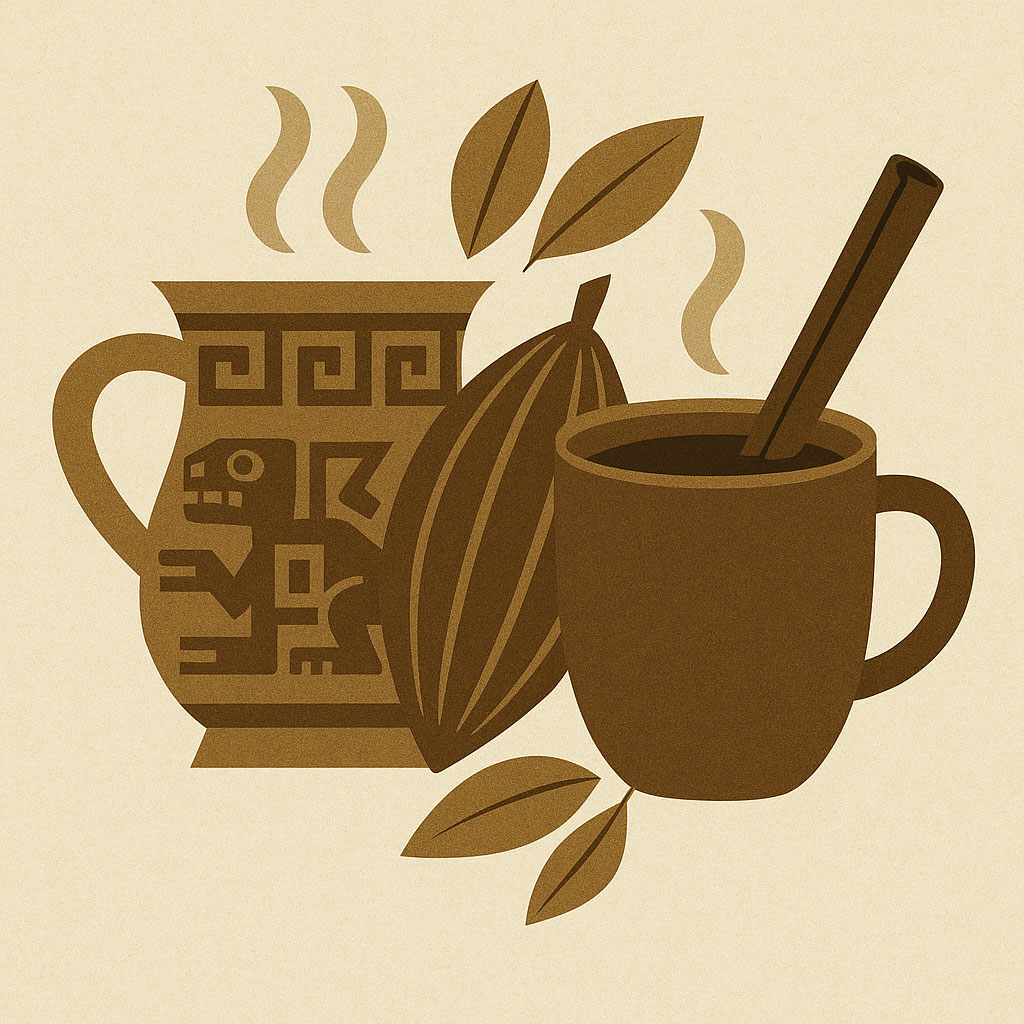
A Millennia-Old Tradition
In Mesoamerican civilizations, among the Maya, Aztecs, and Toltecs, cocoa was consumed as xocolatl, a bitter, foamy beverage made from ground cocoa beans, water, fermented maize, chili, and spices such as annatto and vanilla. Served warm or cold, it held a central place in religious rituals, diplomatic exchanges, and medicinal practices. Cocoa was regarded as sacred, energizing, even divine.
Living Traditions
These customs haven’t disappeared. In many parts of the world, ancestral cocoa drink preparations are still alive today:
-
In Mexico’s Oaxaca region, tejate is still made from fermented cocoa, mamey seeds, maize, and local flowers, following a precise and communal ritual.
-
In Ecuador and Peru’s Amazon, some Indigenous communities still use raw cocoa beans in medicinal broths known for their strengthening or digestive properties.
-
In Grenada, pure cocoa balls (fermented and dried) are grated into water or milk with nutmeg and cinnamon to make a dense, rustic drink steeped in history.
Cocoa in Modern Beverages
Today, drinkable cocoa is enjoying a resurgence in wellness and clean-eating circles. Many modern uses are inspired by these ancient traditions:
-
Cocoa husk infusions: mild, chocolatey, rich in theobromine, they’re valued for their gentle stimulant effect and low bitterness.
-
Plant-based drinks enriched with raw cacao, smoothies, and protein beverages: often included in vegetarian, vegan, or athletic diets, they promote cocoa’s antioxidant properties without roasting.
-
Functional elixirs: blending raw cacao with adaptogenic mushrooms, spices, maca, or ashwagandha, popular in biohacking, yoga, and functional nutrition circles.
These new practices are giving cocoa a renewed place in daily wellness routines.
But one word of caution: raw cocoa, if not thermally stabilized, does not offer formal sanitary guarantees, especially regarding pathogens, mycotoxins, or parasites. This is worth keeping in mind for regular consumption.
Orfève’s Approach
At Orfève, we don’t manufacture cocoa drinks as such. However, we do produce a 100% pure cocoa powder, pressed from our own beans at our Geneva manufacture, with no additives or lecithin. This defatted cocoa powder is rich in flavor and character, ideal for both hot and cold preparations, and faithfully reflects the terroir it comes from.
Through this product, we uphold the same standards of traceability, finesse, and raw material respect, in service of authentic cocoa, whether sipped or cooked.