

The Cocoa Bean and Its Ecosystem
When cocoa is harvested, it’s not the entire pod that makes its way to the chocolate maker.
Only the beans, extracted from inside the fruit, are collected, fermented, and dried.
The outer shell stays behind.
And that’s not an oversight. It’s a conscious, sustainable agricultural choice.
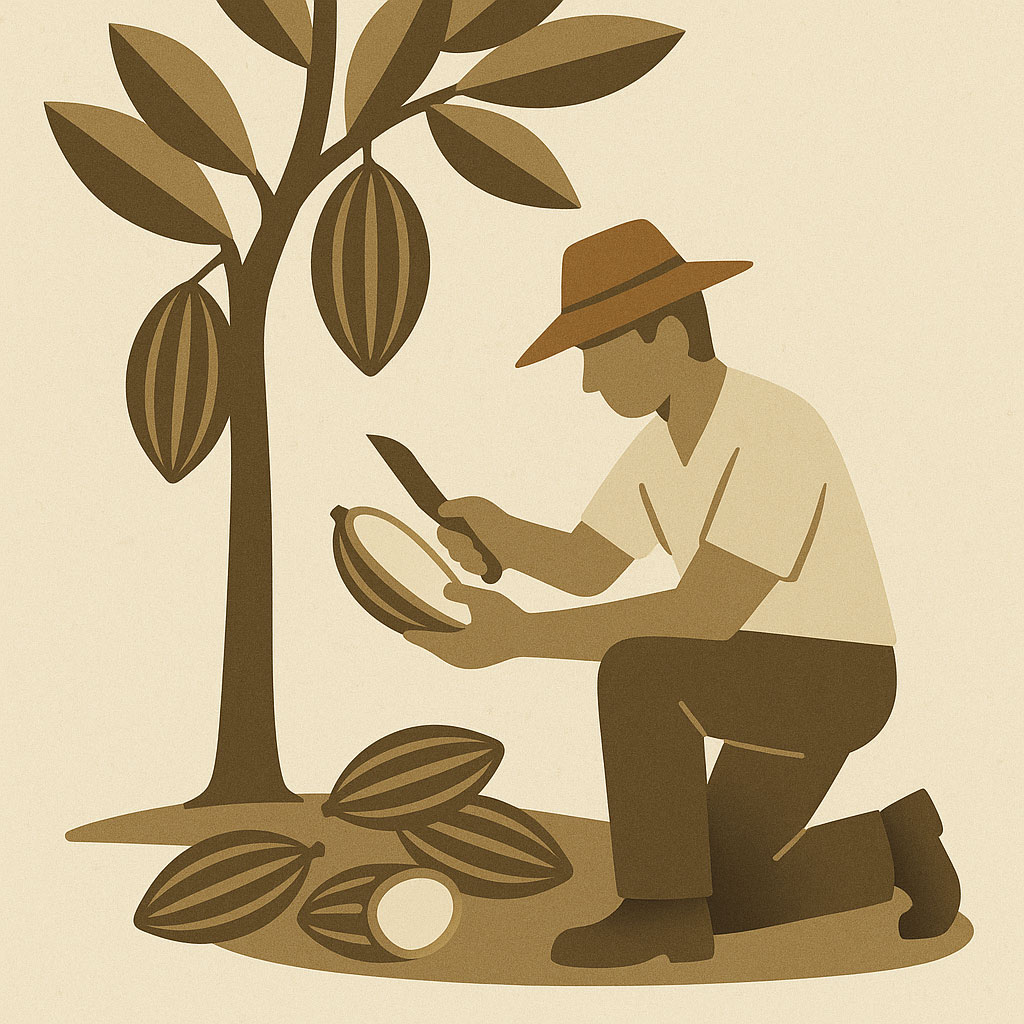
A Large Fruit, a Local Resource
The cocoa pod is a thick, heavy fruit. It can weigh anywhere from 300 grams to over a kilo, but only the 30 to 50 beans it contains are of interest to chocolate makers.
Transporting the empty husks to processing centers would create unnecessary logistical strain, energy-intensive, costly, and ultimately pointless. Especially considering they already serve a valuable role on site.
What’s more, once removed from the tree, the pod begins to decompose quickly. In tropical heat, its lifespan is just a few days before it starts to rot, ferment, attract insects… and become unusable.
Natural Recycling That Feeds the Soil
In the field, cocoa pods are typically left at the foot of the trees. They decompose naturally within a few weeks, thanks to tropical warmth, humidity, and the activity of microorganisms in the soil.
This slow breakdown:
-
returns nutrients the tree previously absorbed,
-
creates a protective organic layer,
-
and helps prevent soil erosion and nutrient leaching.
Some plantations also use pods as mulch, shielding young roots from heat and reducing water evaporation.
In some cases, pods are gathered into piles to speed up decomposition. They form a natural compost that improves soil structure, nourishes the cacao trees, and supports a healthier, more vibrant ecosystem.
In agroecological farming models, this local organic matter is precious. It reduces the need for external fertilizers and limits dependence on costly inputs.
Immediate Valorization, No Processing Required
Far from being waste, cocoa pods act as in-situ compost. No factory, no tech, nature handles reintegration into the living cycle.
This direct, low-impact valorization nourishes the soil where the cocoa grew, without generating additional emissions or requiring complex treatment.