

The Cocoa Bean and Its Ecosystem
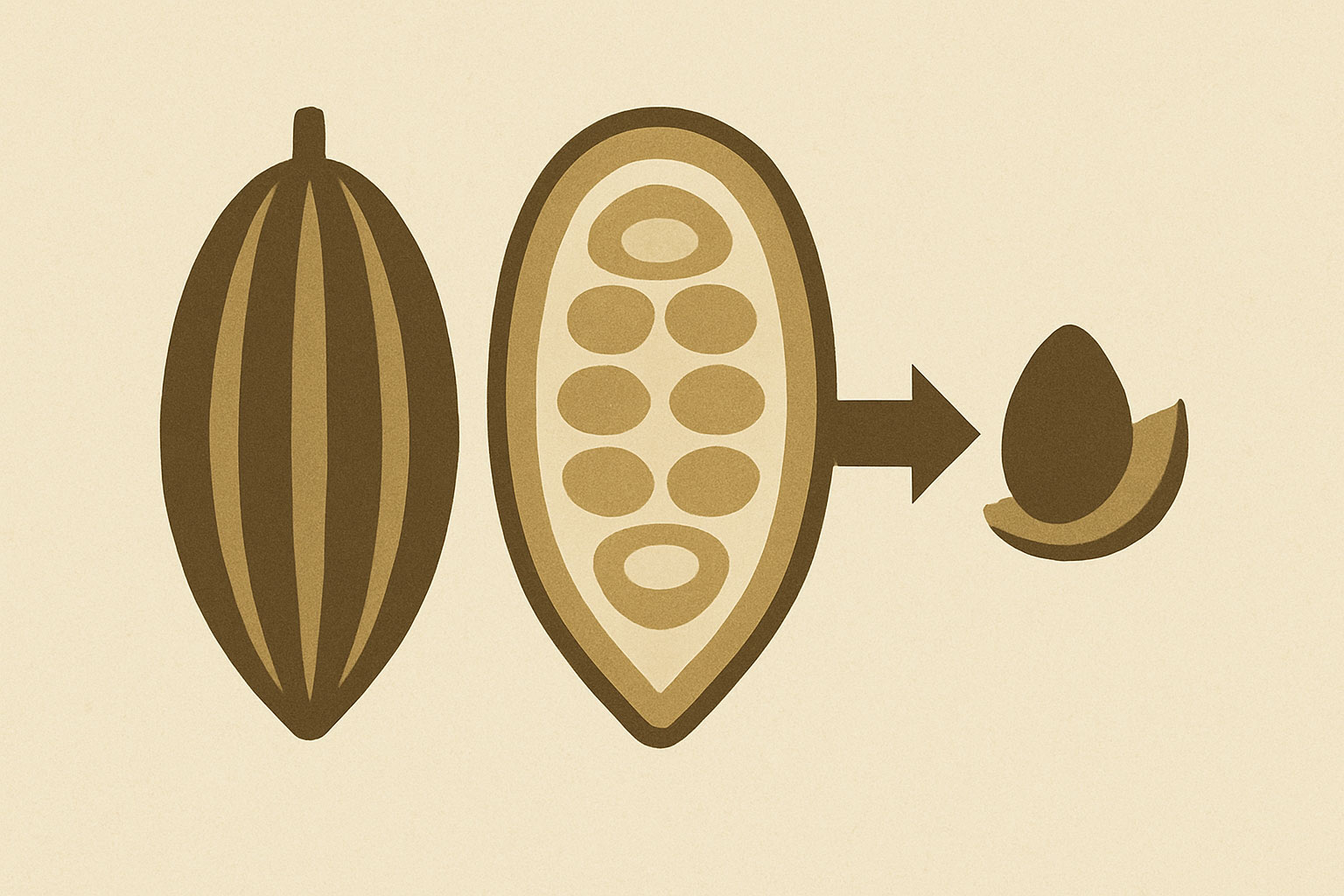
Roughly 25% of the Weight
When we talk about cocoa beans, it’s important to understand that only part of the bean is actually used to make chocolate. On average, about a quarter of a cocoa bean’s weight, roughly 25%, is made up of the shell, the thin outer layer that surrounds the seed’s core.
This percentage may vary slightly depending on:
-
the cocoa variety,
-
the size of the beans,
-
and their moisture content at the time of roasting.
A Natural Protective Role
The shell isn’t just waste, it’s a natural protective layer. It plays a crucial role during roasting:
-
It shields the inner bean from direct heat,
-
Allows for a gentler temperature increase,
-
And helps preserve cocoa’s most delicate aromas.
That’s why, at Orfève, we always roast the whole beans, shells intact.
Why Remove It Afterwards?
Once the beans are roasted, we move to the winnowing stage: separating the shell from the inner core, known as the nib.
The shell is removed because it is:
-
bitter,
-
very fibrous,
-
and can affect the flavor of the chocolate by adding earthy or vegetal notes.
We also remove the germ, the small protrusion at the center of the bean, which could introduce bitterness or affect the texture.
Only the Nib Is Kept
The nib, which represents about 75% of the bean’s original weight, is the noble part, rich in cocoa butter and aromatic compounds. It’s the only part that will be:
-
refined
-
conched,
-
tempered,
-
and eventually molded… to become chocolate.