

The Cocoa Bean and Its Ecosystem
When it comes to agriculture, and cocoa, the terms intensive and extensive farming are often used.
These are two very different models, with major consequences for the land, yields… and quality.
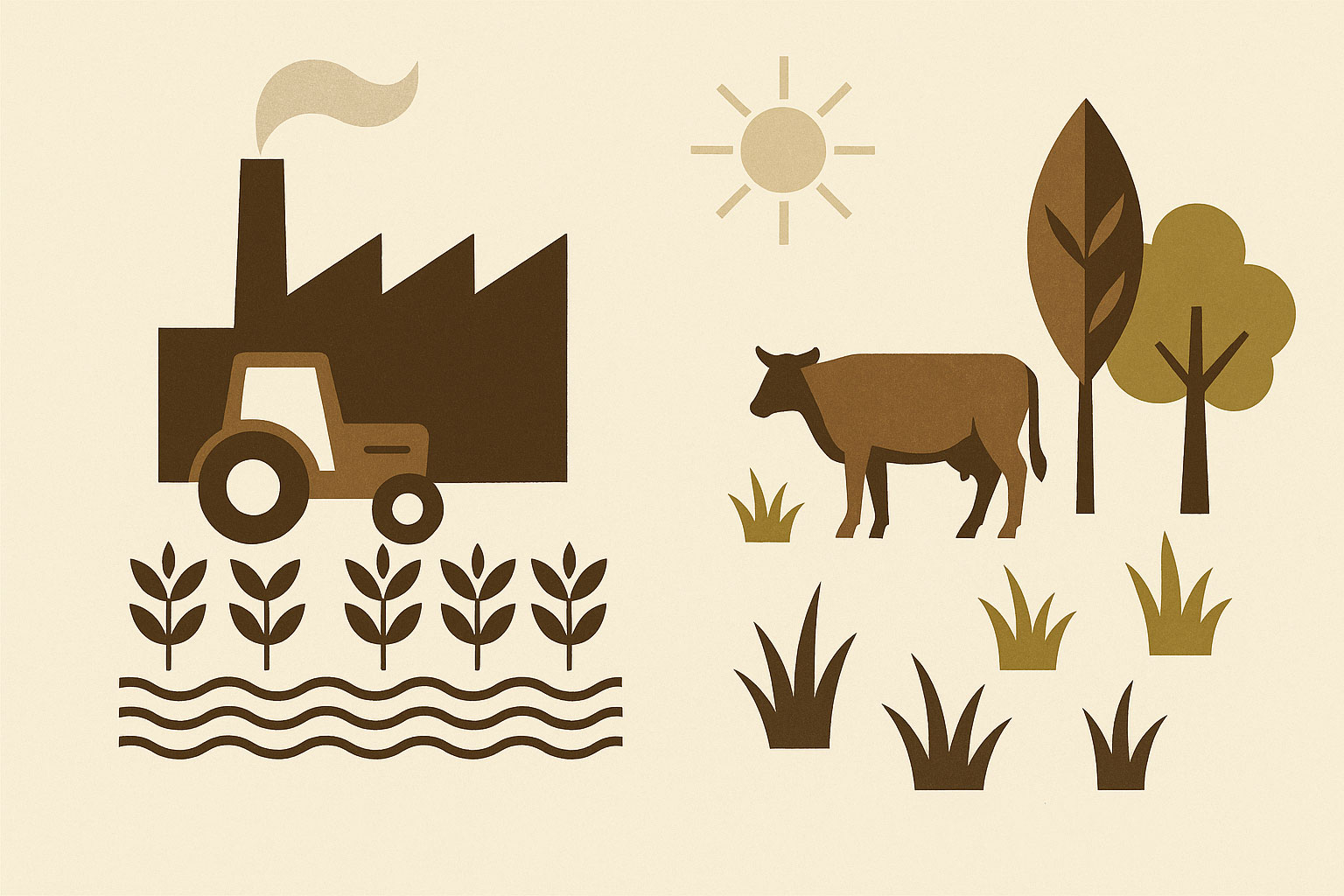
Intensive Farming: Producing More on Less Land
Intensive farming aims to maximize short-term yield. It typically relies on:
-
high planting density
-
chemical fertilizers
-
regular use of pesticides or fungicides
-
sometimes artificial irrigation
-
and heavy mechanization (where possible)
It allows for fast, high-volume production on relatively small areas. But it often depletes the soil, weakens plants, and requires constant inputs, which are costly and unsustainable.
In the case of cocoa, this means dense, sun-exposed plantations, using varieties selected for productivity, but often poor in flavor.
Extensive Farming: More Space, Fewer Inputs
Extensive farming follows a gentler logic:
-
lower plant density
-
fewer external inputs
-
more space between trees
-
and limited human intervention
It usually requires more land, but better respects natural balances. Yields per hectare are lower in the short term, but soils remain fertile longer, and plants experience less stress.
Agroforestry often falls into this category, a prime example of extensive farming, where cacao grows beneath shade trees in a rich, living ecosystem.
Orfève’s Approach
At Orfève, we favor an extensive, sustainable, and craft-based approach.
We work exclusively with cocoa that is not grown intensively, either in agroforestry systems or in small family-run micro-parcels.
Why? Because flavor, sustainability, and ethics are never born from intensity, only from respect for the living.
And because great cocoa, like great wine, does not grow in an open-air factory.