

Small Truths About Chocolate
During pregnancy, nutrition becomes a sensitive and carefully considered topic, what’s beneficial, what to avoid, and what can be enjoyed in moderation.
Chocolate, often associated with comfort and pleasure, raises legitimate questions. Can it be eaten during pregnancy? Should it be limited? What kind should be preferred? Here’s what science, and common sense, tell us.
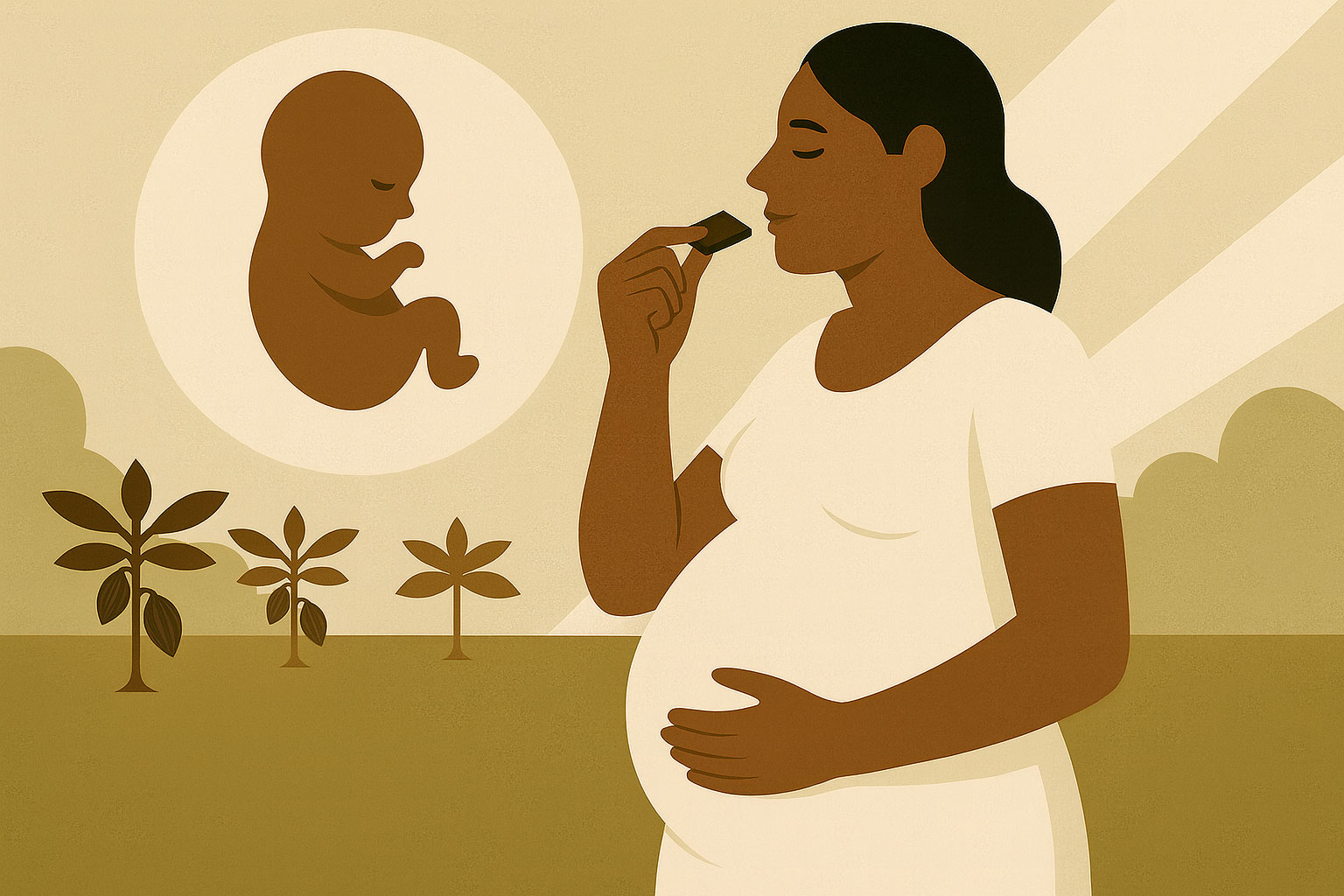
Chocolate Is Not Forbidden During Pregnancy
There is no serious research that contraindicates chocolate consumption for pregnant women, provided it is eaten in reasonable quantities and is made with high-quality ingredients.
Pure dark chocolate, low in sugar and properly formulated, can even offer nutritional benefits, for both the mother and fetal development.
The Potential Benefits of High-Quality Chocolate
Artisanal dark chocolate with a high cocoa content (at least 70%) provides:
– Magnesium, which helps reduce cramps and supports nervous system regulation,
– Iron, essential for red blood cell production,
– Potassium and zinc,
– Natural antioxidants (flavanols) that may support vascular health,
– A small amount of theobromine, which may aid in blood vessel dilation and improve circulation.
Some studies have even suggested a positive correlation between moderate dark chocolate intake and healthy birth weight or a lower risk of preeclampsia. While these effects remain to be confirmed, they support the idea of moderate, informed enjoyment, not strict avoidance.
What to Avoid During Pregnancy
Some types of chocolate should be consumed with caution while pregnant:
– Highly sweetened industrial chocolates: High in refined sugars and added fats, they can lead to blood sugar spikes and excessive weight gain.
– Products containing coffee or guarana extracts: Be cautious with cumulative caffeine intake. The recommended limit during pregnancy is 200 mg/day. (A 50 g serving of 70% dark chocolate contains approximately 10–20 mg.)
– Raw, unfermented chocolate: These products may lack microbiological safety, especially if not produced under strict hygiene standards. They may pose a risk of contamination.
The Importance of Ingredient Quality
As always, it’s the composition that matters most. A pure dark bean-to-bar chocolate, free from additives, lecithin, and artificial flavors, is a safe and sensible choice.
By contrast, ultra-processed chocolate bars provide empty calories and can interfere with a stable, nourishing diet.
Orfève’s Approach
At Orfève, we believe pregnancy is a time when every ingredient matters.
Our tablets are made from carefully selected fine cocoa beans, with no lecithin and no additives.
Rich in cocoa and low in sugar, they allow pregnant women to preserve sensory pleasure, while respecting their own balance and that of their developing child.