

The Cocoa Bean and Its Ecosystem
Behind every chocolate bar lies a supply chain. And whether it relies on commodity cocoa or fine cocoa can make a dramatic difference for the environment.
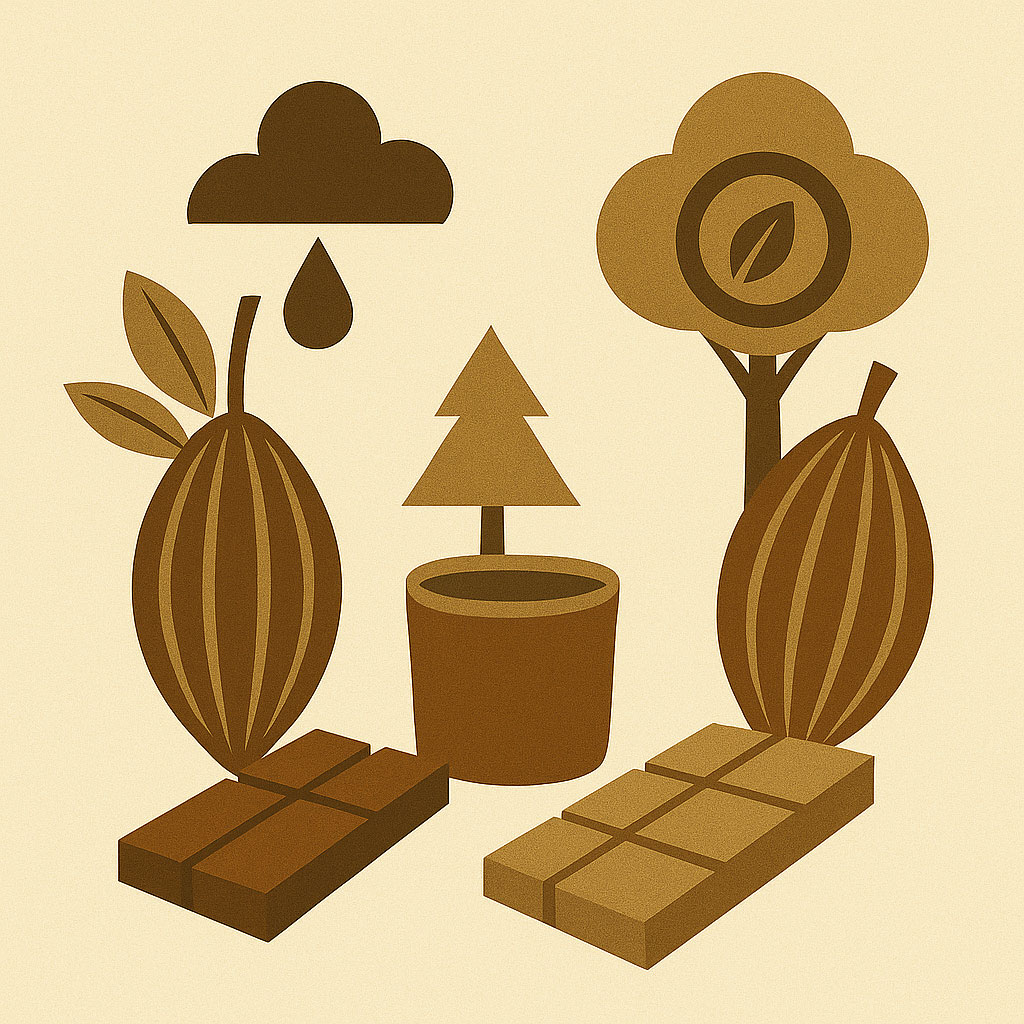
Commodity Cocoa: Productivity First
Commodity cocoa, also known as bulk cocoa, accounts for about 90 to 95% of global production. It is grown using industrial methods: monoculture, deforestation, maximum yield, and heavy use of chemical inputs.
These practices result in:
-
soil degradation,
-
rapid loss of biodiversity (plants, insects, animals),
-
water pollution from fertilizers and pesticides,
-
large-scale deforestation, especially in West Africa, to expand farmland.
This widespread model sacrifices long-term sustainability for short-term gains, at the cost of local ecosystems… and the quality of the cocoa itself.
Fine Cocoa: Lower Yield, Greater Respect
In contrast, fine cocoa is typically cultivated:
-
in agroforestry systems (diverse species, natural shade),
-
on small family plots,
-
without synthetic chemicals, or with minimal and controlled input.
This type of farming helps:
-
preserve soil through natural organic matter,
-
sustain biodiversity around plantations,
-
reduce deforestation by valuing quality over quantity,
-
lower carbon emissions thanks to more restrained practices.
Though less productive, this model is far more sustainable and better aligned with the fight against climate change.
The True Environmental Cost of Cocoa
The paradox of cocoa: what’s cheapest on the shelf is often the most expensive for the planet. Intensive agriculture not only harms soils and biodiversity, but also weakens local communities that rely on unstable, underpaid monocultures.
Investing in fine, traceable cocoa, grown under strict ecological and social standards, means supporting a more sustainable and ethical model.
Orfève’s Approach
At Orfève, we work exclusively with fine cocoas sourced through responsible channels. All our origins are cultivated with deep respect for ecosystems, without deforestation or excessive chemical use. Because exceptional chocolate can only come from sustainably grown cocoa, rooted in living soil.