

The Cocoa Bean and Its Ecosystem
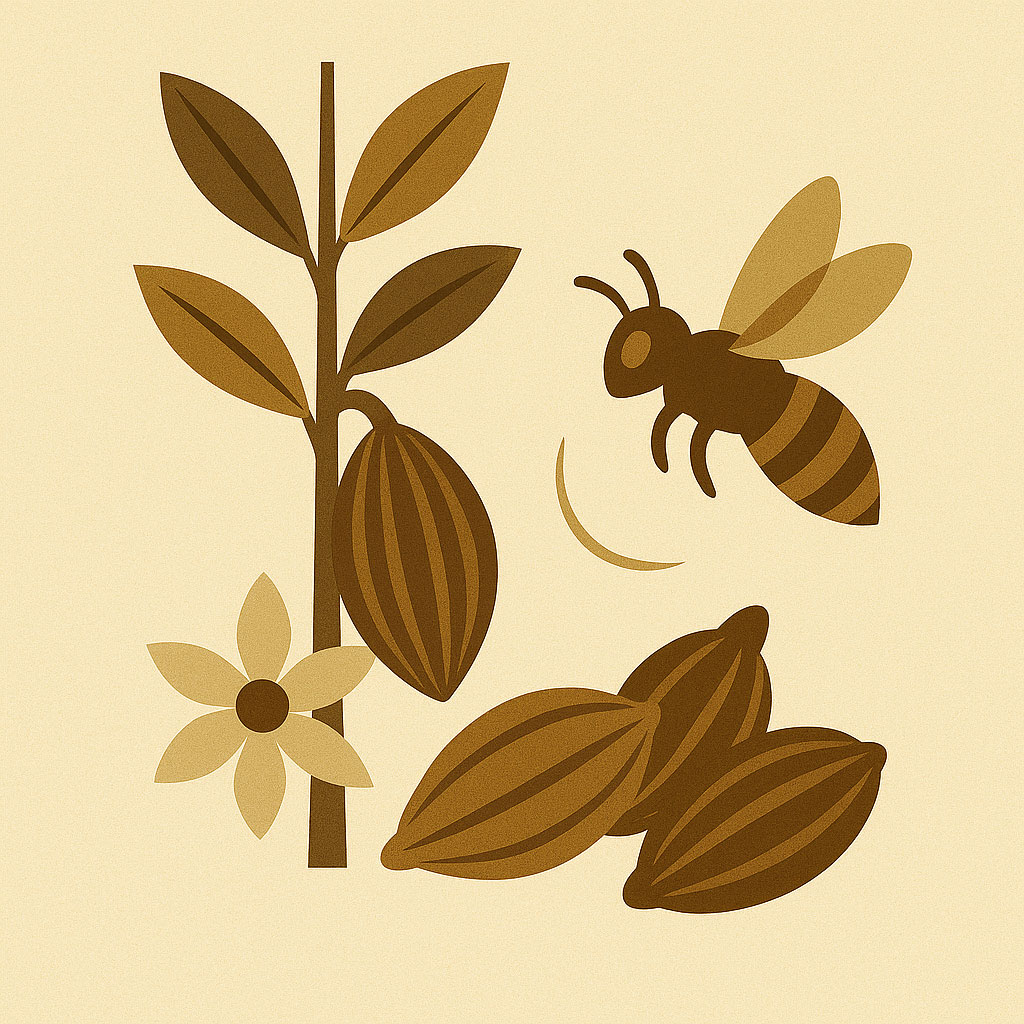
Cocoa cannot exist without pollination. And yet, few people know that this quiet, hidden step is essential for the formation of cocoa pods. Unlike intensive crops that rely on generalist pollinators like bees, the cacao tree depends on specific, much smaller insects: Forcipomyia midges, tiny flies measuring less than 2 mm.
A Demanding and Fragile Pollination Process
The cacao flower is tiny, complex, and hard to reach. It grows directly from the trunk or large branches (a phenomenon called cauliflory), and it neither smells nor looks appealing to common pollinators. Only the most delicate dipteran insects can access its interior and carry pollen from one tree to another.
This specificity makes cocoa highly dependent on the biodiversity of its surrounding environment. In monoculture systems, especially in deforested or pesticide-exposed areas, these micro-pollinators become scarce, directly threatening cacao productivity. Studies show that in some industrial plantations, less than 10% of flowers are naturally pollinated.
High-Quality Cocoa Needs Diversity
Agroforestry systems, on the other hand, maintain the conditions necessary for cocoa pollinators to thrive. Shade trees, hedges, and moist understory vegetation create a stable microclimate and a habitat for beneficial insects. Floral richness and plant diversity also support birds, amphibians, and other natural ecosystem regulators.
The Future of Cocoa Depends on Respecting Life
Some initiatives aim to better understand and protect cocoa pollinators by:
-
implementing reforestation programs in cocoa-growing areas,
-
reducing or eliminating pesticides,
-
introducing companion plants that support midge populations,
-
and promoting local biodiversity through cooperative management plans.
Protecting cocoa pollinators means safeguarding the crop itself, and improving bean quality. Less stress for trees, better flowering, more efficient pollination: it’s a virtuous cycle rooted in a living ecosystem.
Orfève’s Approach
At Orfève, we work with farmers committed to agroecological practices and biodiversity preservation. Our sourcing partners identify plantations where cacao is grown within rich, balanced ecosystems. Because great chocolate isn’t made against nature, it’s made with it.