

The Cocoa Bean and Its Ecosystem
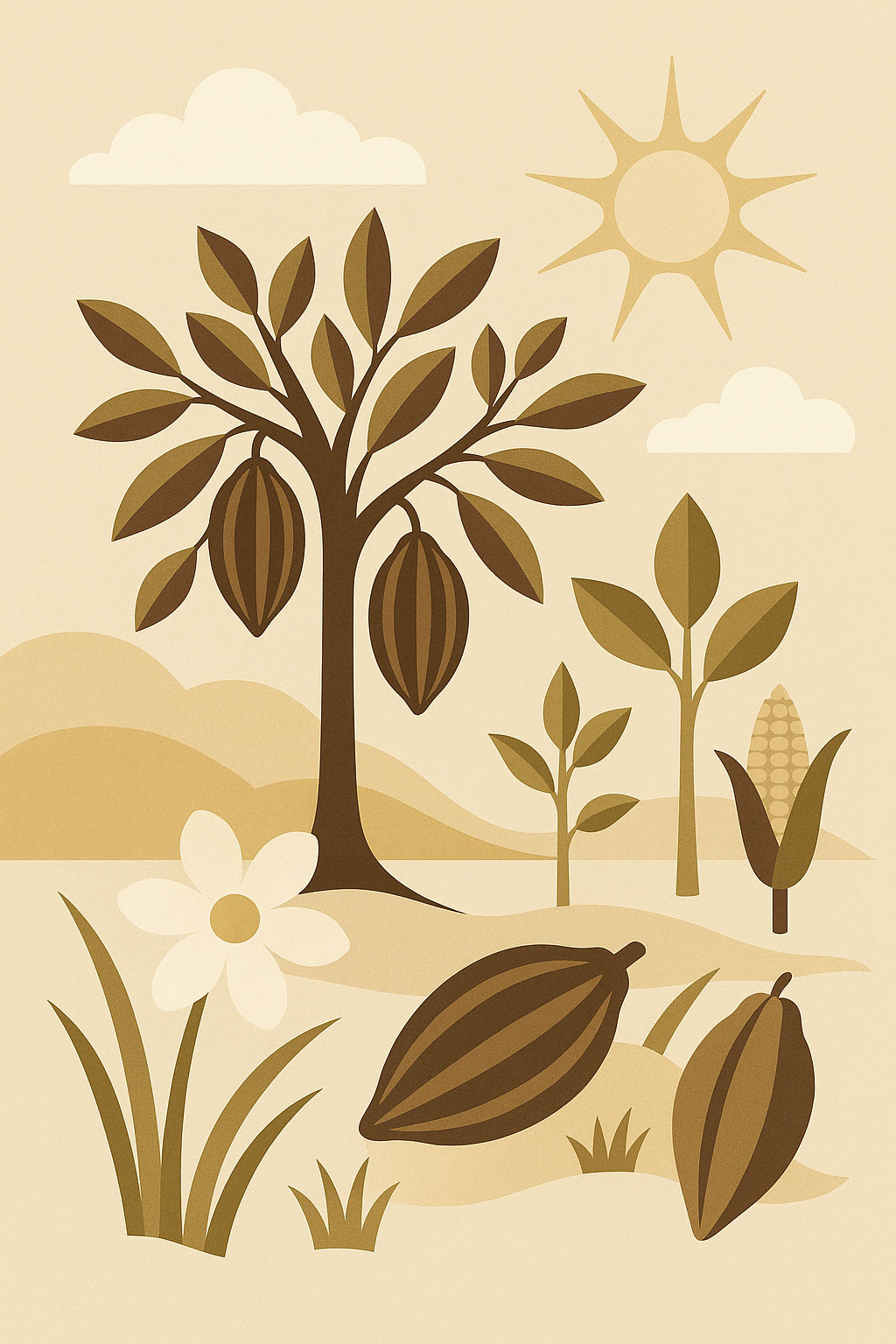
Agroforestry is the practice of growing crops within or under forest cover.
This farming method respects natural ecosystems and stands in contrast to the logic of intensive monoculture plantations.
While it is less mechanized and harder to scale, agroforestry remains by far the best way to grow cocoa, for the plant, for the soil, and for local communities.
Why Does the Cacao Tree Prefer the Forest?
Cacao trees don’t like harsh sunlight or drought.
They naturally thrive in the shade of taller trees, in humid environments rich in organic matter.
Under forest cover:
-
they’re naturally protected from direct sun,
-
they benefit from living soil, rich in nutrients,
-
they flourish without the need for intensive treatments.
Is It Profitable for Farmers?
Yes, and often more so than intensive monoculture, in the long term.
Based on the experience of many farmers we’ve met:
-
agroforestry requires no irrigation or costly chemical fertilizers,
-
it preserves soil fertility far longer,
-
and yields can be comparable, or even higher, over time.
It’s a more sustainable, more resilient model, and often more profitable once the first few years have passed.
Many producers report earning a better living from agroforestry than from exhausting monocultures.
A Model with Many Other Benefits
Agroforestry also makes it possible to:
-
diversify crops on the same land (bananas, mangoes, timber, spices…),
-
diversify farmer income streams,
-
and actively combat deforestation.
By planting trees instead of cutting them down, producers restore ecosystems while growing quality cocoa.
Agroforestry is good for nature, and for the families who cultivate it.
Orfève’s Approach
At Orfève, we source our beans from producers who grow cacao in agroforestry systems.
Because great cacao needs a living ecosystem, not an open-air factory.