

The Cocoa Bean and Its Ecosystem
A Natural Byproduct Full of Possibilities
When making chocolate, the first step is to crack open cocoa beans to extract the nibs, the precious inner part, rich in cocoa butter and flavor, that will be transformed into chocolate.
But something remains: the shell. Thin, light, and often forgotten, it still has much to offer.
Composting: Naturally Enriching the Soil
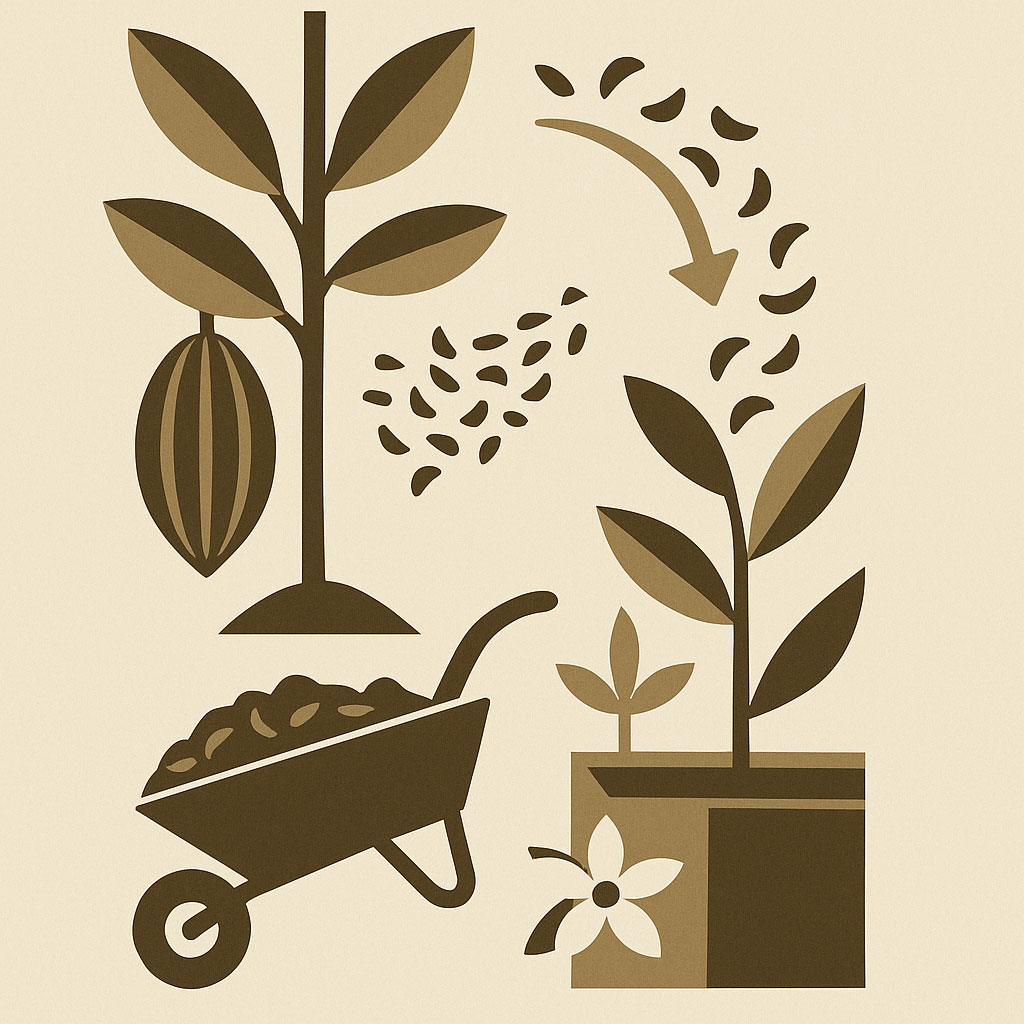
At Orfève, we give these shells a second life by incorporating them into our compost. They break down naturally and help enrich the soil with organic matter, contributing to a circular and regenerative system.
Mulch: Limiting Weeds in the Garden
Another useful option: cocoa shells can be used as mulch in gardens. They retain moisture well, suppress unwanted weeds, and release a pleasant chocolate aroma when fresh.
However, a word of caution: although natural, they still contain theobromine, a stimulating compound found in cocoa that can be toxic to some pets, especially dogs.
Infusion: A Gentle Cocoa-Scented Brew
Finally, they can be used for infusion. A handful of shells steeped in hot water creates a light, chocolatey drink, sugar-free, additive-free, and perfect for winter evenings.
Nothing Is Wasted
At Orfève, we strive to make use of every part of the bean. The nib becomes chocolate. The shell nourishes the earth… or the cup. Even the thinnest husk carries something of what cocoa is: warmth, gentleness, and the memory of soil.