

The Craft of Chocolate
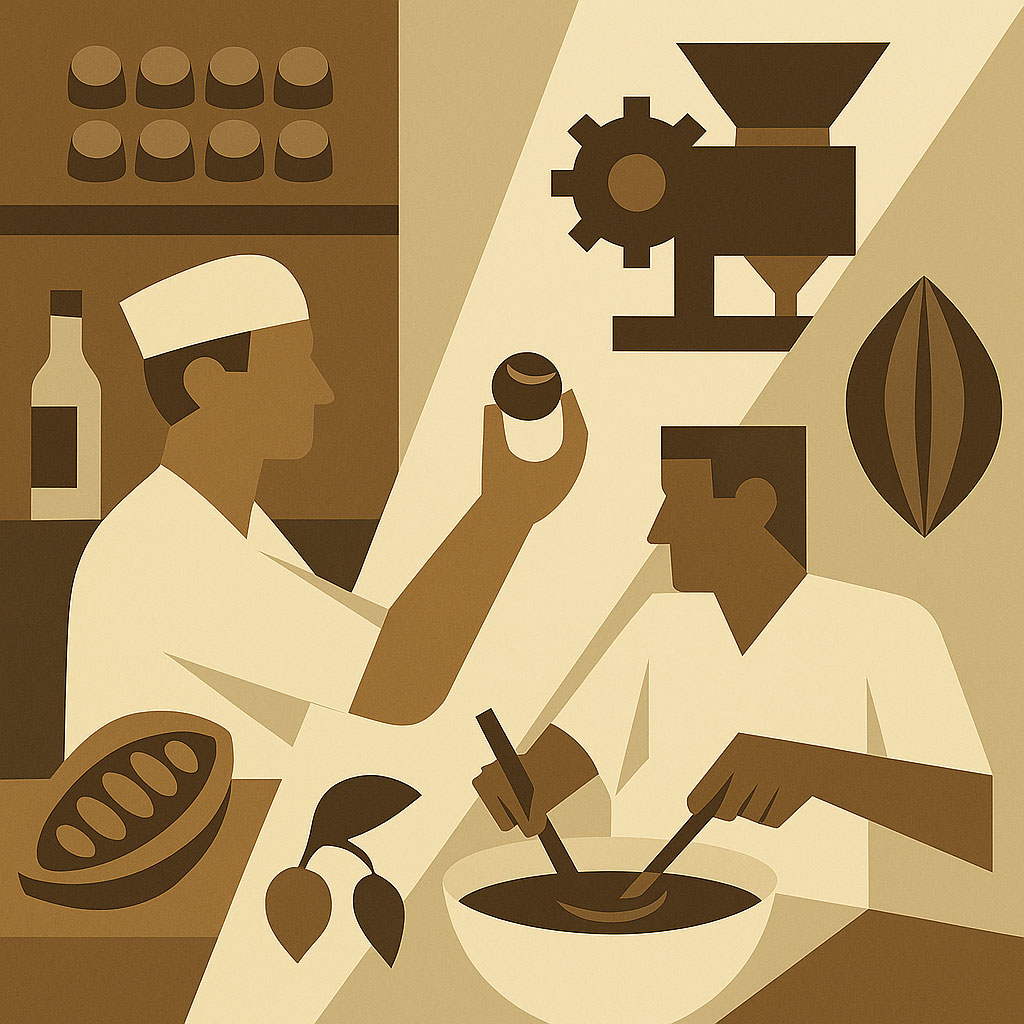
A Demanding, and Space-Consuming, Craft
Making chocolate from the bean requires a lot:
-
space,
-
time,
-
machinery,
-
and environmental tolerance (odors, noise, deliveries, ventilation…).
These conditions are increasingly rare today, especially in urban settings.
A Skill Once Common
Until the 1950s, Europe still had many small chocolate factories. They received raw cocoa beans, roasted, ground, and conched them, producing chocolate bars, sometimes for direct sale, sometimes to supply other artisans.
But with the rise of mass distribution and food industrialization, the model shifted.
The Rise of Couverture Chocolate Makers
Large manufacturers began producing cheaper, standardized chocolates, designed for ease of use.
Chocolatiers could source ready-to-use couverture chocolate from specialized makers, fluid, temperable, moldable.
For small manufacturers, the barriers grew:
-
high costs,
-
bulky machinery,
-
large space requirements,
-
logistical and regulatory challenges in cities.
Most gave up chocolate-making to focus instead on bonbons, pralines, and molded confections, using chocolate that was already made.
A Matter of Space, Logistics, and Choice
In a city, a chocolatier can work in 40 m².
A chocolate maker needs at least 200–300 m², proper ventilation, significant power supply, frequent deliveries… and tolerant neighbors.
This is why very few artisans still transform cocoa beans themselves today.
Orfève’s Approach
At Orfève, we are proud to be part of this independent minority. Today, making chocolate from the bean is the exception, not the rule.
It requires space, machinery, technical skill, and a tailored organization.
But it also allows full control over every step of the process, from sourcing the best beans to preserving quality through to the final bar.
This is the path we’ve chosen: to remain makers, in order to guarantee chocolate that is authentic, traceable, and uncompromising.