

The Secrets of Chocolate making
Making chocolate from the cocoa bean is a complex, demanding, and precise craft. Each step, from harvest to the final bar, directly impacts the chocolate’s quality. Here are the 10 essential stages of bean-to-bar chocolate making.
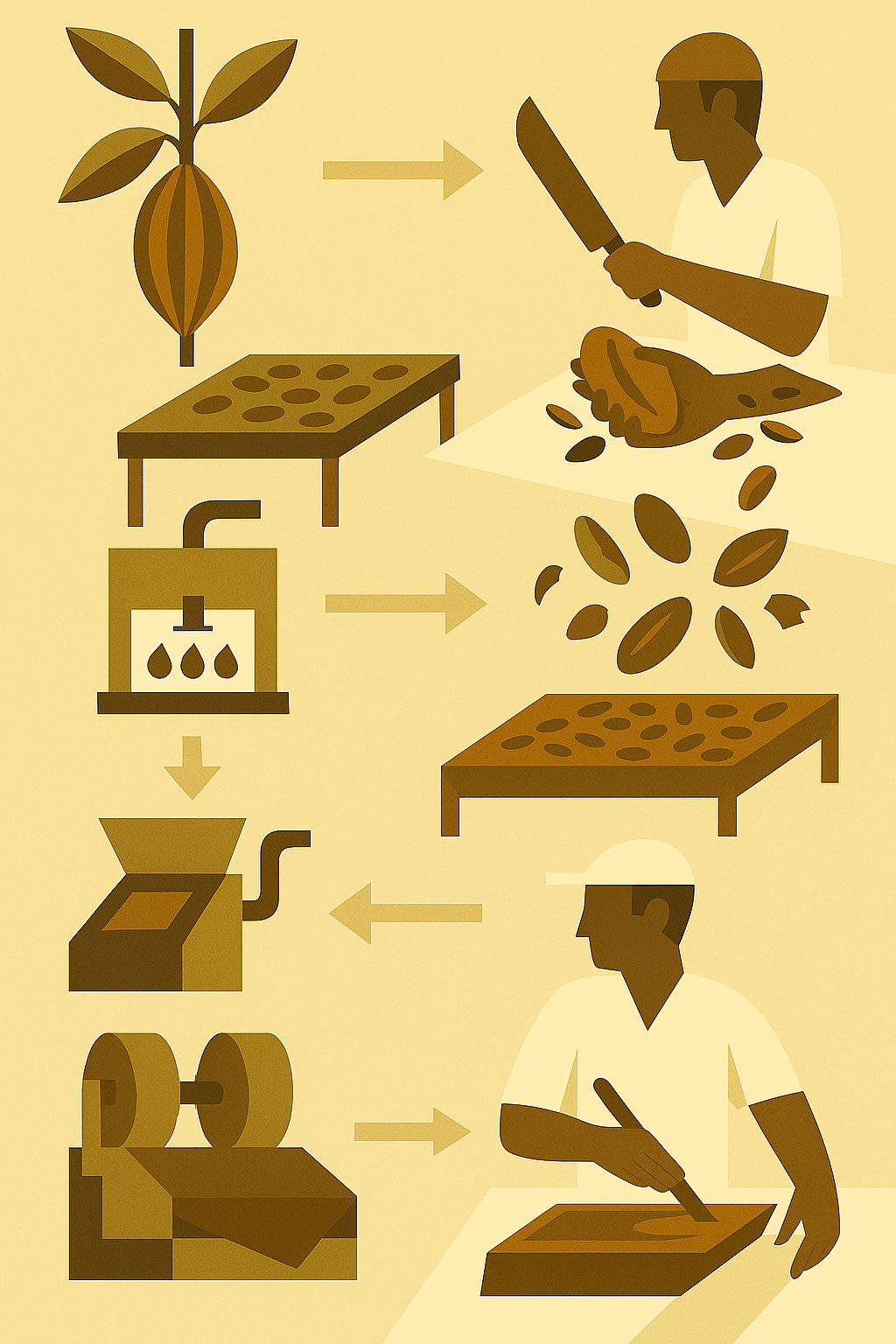
1. Harvesting the Pods
Cocoa comes from the pod, the fruit of the cacao tree. Each pod contains 30 to 50 beans, coated in a sweet white pulp. The pods are hand-picked at peak ripeness to ensure quality cocoa.
2. Pod Opening and Fermentation
The beans are extracted from the pods and immediately placed in wooden boxes (100 kg to 1 tonne) covered with banana leaves to ferment for 5 to 7 days. This critical step develops the precursors of chocolate aroma.
3. Drying
After fermentation, beans are dried in the sun or mechanical dryers. This halts fermentation and reduces moisture to around 7%, preventing mold and ensuring proper preservation.
4. Sorting and Cleaning
The dried beans are sorted,by hand or machine,to remove defects, broken pieces, or foreign objects. This is a vital step to ensure purity of the final product.
5. Roasting
Beans are gently heated (usually between 110°C and 140°C). This mild roasting enhances aroma, reduces acidity, develops color,and ensures food safety.
6. Cracking and Winnowing
Once roasted, beans are crushed to separate the shell from the nib (the edible part). Winnowing uses airflow to blow away the light shells, keeping only the nibs for chocolate making.
7. Grinding and Pre-Refining
Nibs are ground into a fluid paste called cocoa liquor. This is the first stage of liquid chocolate, containing both dry cocoa solids and naturally occurring cocoa butter.
8. Refining
The paste is refined using rollers or ball mills to create an ultra-smooth texture. Sugar (and cocoa butter) are added. The target is a particle size under 30 microns,imperceptible on the tongue.
9. Conching
This thermal, mechanical, and aromatic refinement lasts several hours,or even days. It homogenizes the paste, develops aroma, and removes residual acidity or volatile notes.
10. Tempering, Molding, and Crystallization
Before molding, chocolate is tempered,gently heated, cooled, and reheated to precise temperatures. This creates stable cocoa butter crystals, ensuring shine, snap, and shelf life. The chocolate is then poured into molds, cooled, demolded… and ready to enjoy.
Orfève’s Approach
At Orfève, every step is carried out by hand in our Geneva workshop. We take the shortest path from bean to bar, respecting the ingredient in its entirety: roasting, winnowing, refining, and conching in a single machine; tempering and molding on site.
Each origin is processed individually with bespoke settings at each stage to reveal the unique identity of the cacao. No shortcuts. Just chocolate in its purest form.