

The Secrets of Chocolate making
Chocolate is a living material. And like all living things, it has its vulnerabilities. One of the most insidious? Moisture. Invisible to the eye, it can alter the taste, texture, glossiness, and even the shelf life of a chocolate bar.
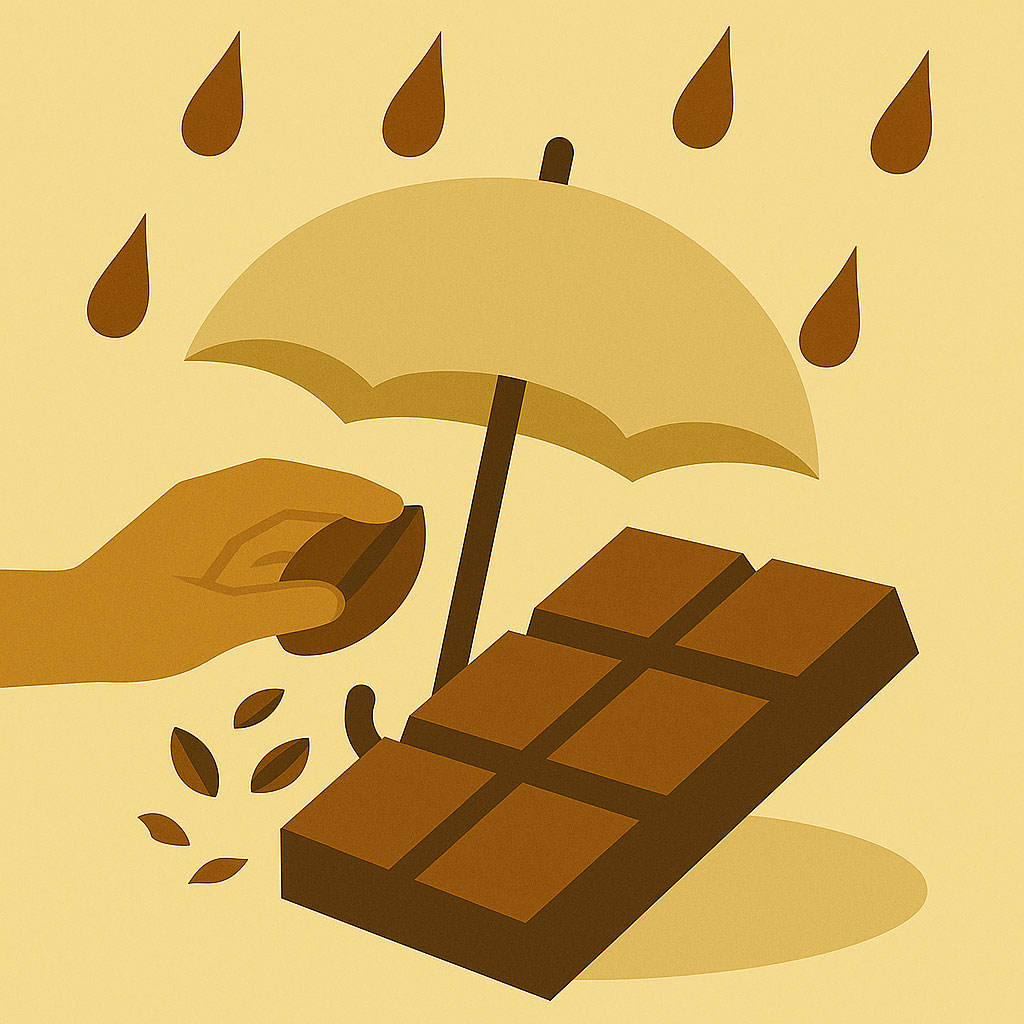
Why Is Chocolate So Sensitive to Moisture?
Chocolate is naturally anhydrous,it contains almost no water. This lack of moisture is what gives it a long shelf life without additives or preservatives.
But that delicate stability can be compromised as soon as chocolate is exposed to a humid environment.
Moisture affects chocolate on several levels:
-
It disrupts the texture, often causing a grainy surface layer to form.
-
It dulls the shine by breaking down the crystalline structure of the cocoa butter.
-
It can encourage mold growth, especially in filled or poorly stored products.
-
It alters the flavor, since aroma compounds are largely carried by fat.
Chocolate Bloom: A Warning Sign
You’ve likely seen chocolate turn white or mottled on the surface. This is a common phenomenon known as fat bloom or sugar bloom, typically caused by moisture or temperature shocks. It’s harmless in terms of food safety, but it does affect texture and taste.
-
Fat bloom: Cocoa butter migrates to the surface due to heat or moisture.
-
Sugar bloom: Humidity dissolves sugar at the surface, which then recrystallizes and leaves a chalky white film.
How to Store Chocolate Properly
Here are a few simple but essential rules:
-
Store chocolate between 16 and 20°C (60–68°F), away from light.
-
Avoid the refrigerator, which is too humid.
-
Use airtight packaging or sealed containers.
-
Avoid sudden temperature changes.
Orfève’s Approach
Our chocolates are crafted without lecithin or stabilizers, in a humidity-controlled environment.
We mold, store, and ship our bars under optimal conditions.
But once they leave our hands, chocolate becomes more vulnerable to ambient moisture, temperature shocks, and kitchen heat sources.
In addition to the tips above, we recommend keeping your bars away from ovens, stovetops, or any warm surfaces. These areas create micro thermal shocks that can gradually affect the chocolate’s integrity.