

Small Truths About Chocolate
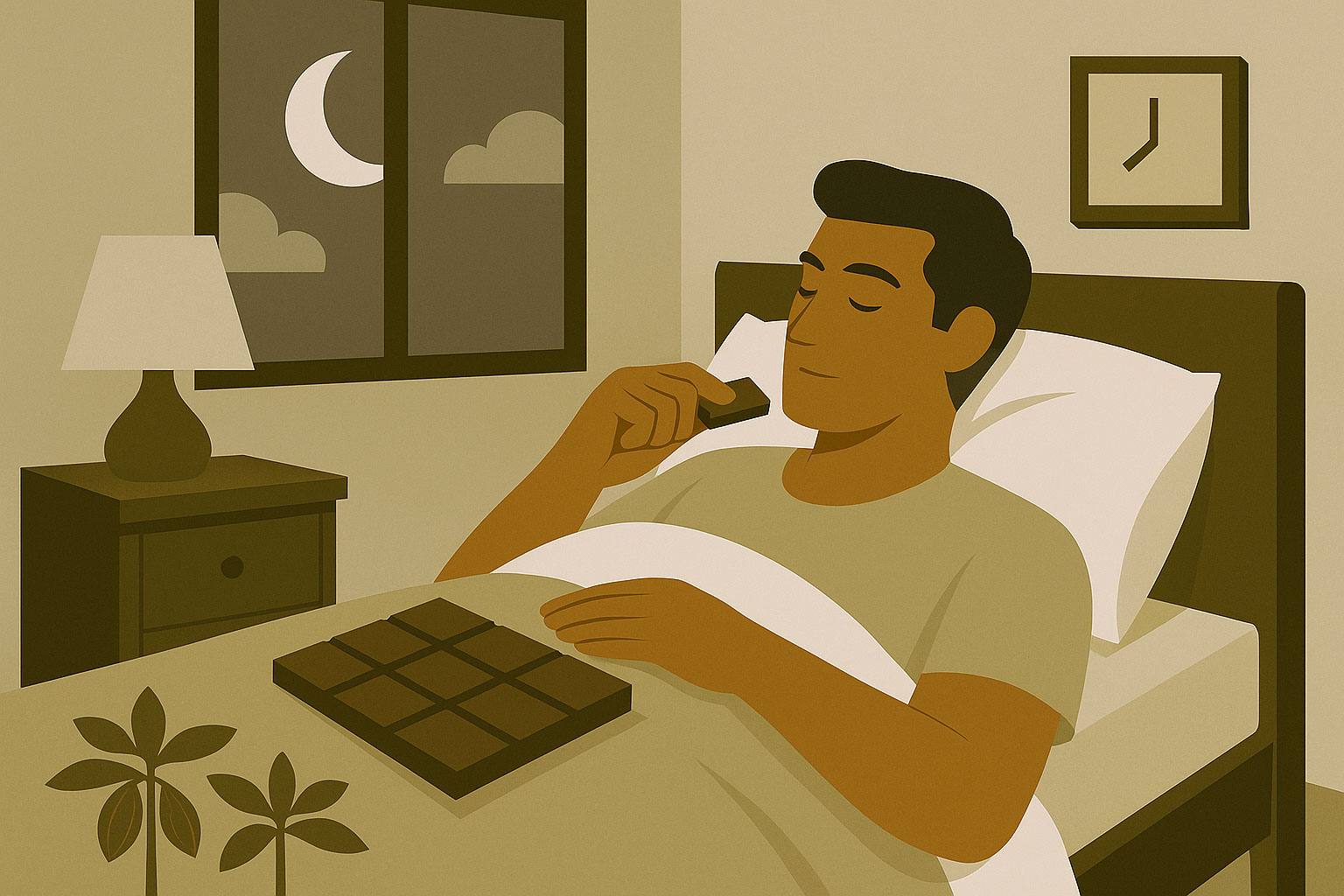
Can you eat chocolate in the evening without disturbing your sleep?
The question often comes up, and the answers can be contradictory. Some people say chocolate stimulates them and keeps them awake; others find it calming. So what’s the truth? Does chocolate actually affect sleep? And if so, how?
Chocolate Contains Stimulants… But in Small Amounts
Dark chocolate naturally contains:
-
Caffeine, in small quantities (about 20 mg per 50 g of 70% dark chocolate, three to four times less than an espresso),
-
Theobromine, a gentler stimulant found in cocoa, which acts on the central nervous system but is less potent than caffeine.
For sensitive individuals, these compounds may be enough to delay sleep, especially if consumed in large amounts or very late in the evening. For others, the effect is barely noticeable.
An Indirect Effect on Mood and Relaxation
Paradoxically, chocolate may also support a relaxed emotional state that’s conducive to falling asleep:
-
It stimulates serotonin production (a precursor to melatonin, the sleep hormone),
-
It contains magnesium, which relaxes muscles and reduces nervous excitability,
-
Its rich sensory experience can interrupt stress or racing thoughts.
Conclusion: it all depends on individual sensitivity and context. A square of pure dark chocolate, slowly savored early in the evening, has a very different effect from eating an entire bar at 10 PM.
Watch Out for Sugary or Processed Products
It’s not always the cocoa compounds that disturb sleep,but rather the sugar and additives:
-
Overly sweet chocolate causes a rapid spike in blood sugar, followed by a crash that can interfere with falling asleep.
-
Industrial chocolates (filled, flavored, enriched) may contain additives, artificial flavors, or stimulants (like coffee or guarana) that disrupt the sleep–wake cycle.
A pure chocolate is therefore preferable in the evening to avoid unnecessary stimulation.
Portion Size and the Power of Ritual
As with many foods, the key lies in moderation and intention:
-
A small portion (5 to 15 g) in the late afternoon or early evening,
-
Slowly savored, during a moment of calm,
-
Can become a transition ritual, marking the end of the day and preparing the body for rest.
For some, this intentional gesture supports relaxation,without negatively impacting sleep quality.