

Small Truths About Chocolate
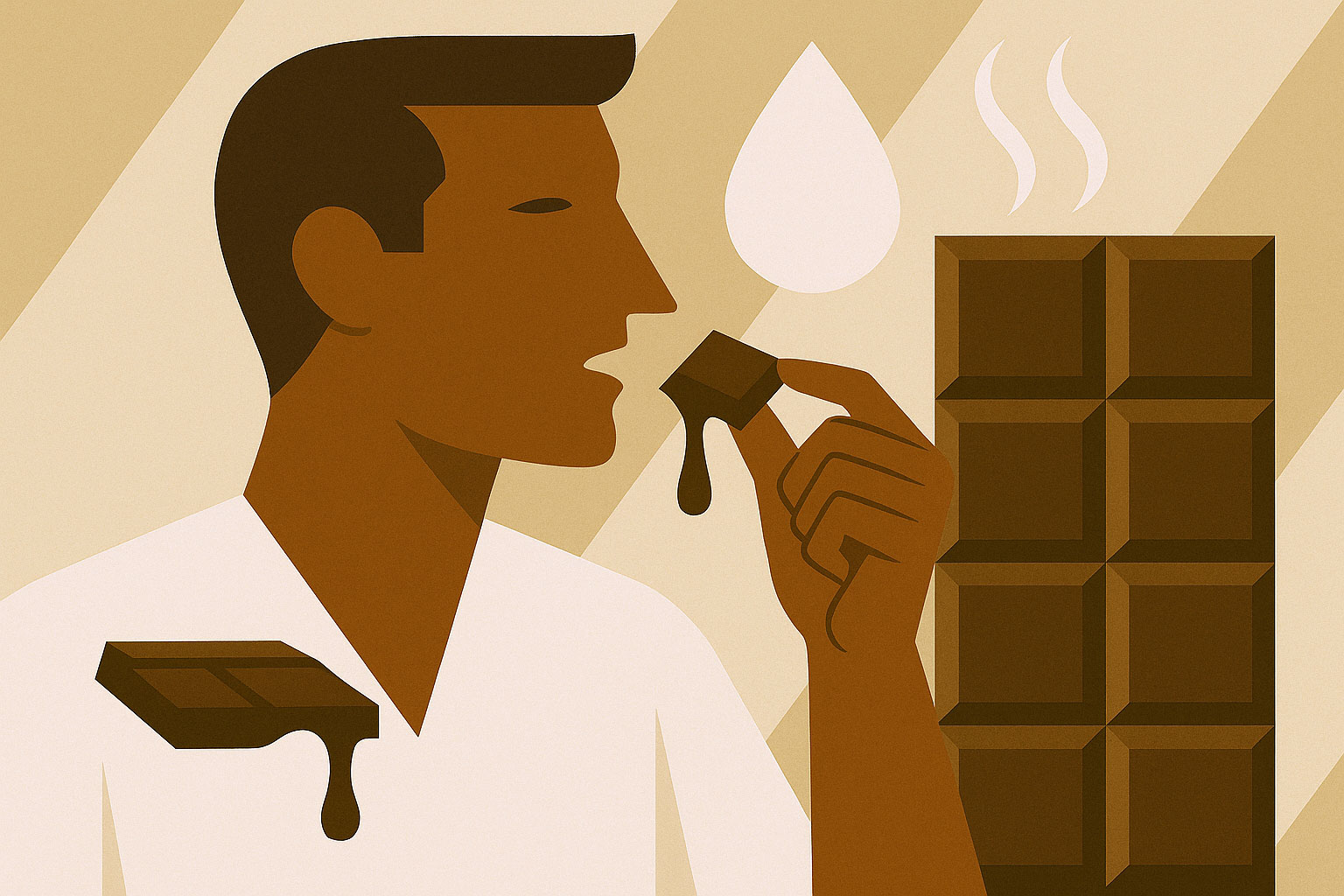
It’s one of the most sensual pleasures of chocolate: that slow, velvety melt against the roof of your mouth. But why does it melt like this? What magic, or science,lies behind this experience?
A Very Special Fat
The main reason for this melting texture is cocoa butter: the natural fat found in cacao beans, making up about 50 to 55% of their weight.
It’s what gives chocolate:
-
its shine,
-
its fluidity,
-
its satisfying snap at room temperature,
-
and above all… its ability to melt on contact with your mouth.
A Unique Melting Point
Cocoa butter is one of the rare vegetable fats with a melting point close to human body temperature, around 34 to 36 °C (93–97 °F). This thermal threshold means it remains solid at room temperature but begins melting as soon as it touches your lips or palate.
This is what creates chocolate’s signature transformation: the seamless shift from solid to liquid with no resistance.
The Importance of Proper Crystallization
For chocolate to melt smoothly (not greasy, sticky, or dull), its crystalline structure must be properly formed. That’s the purpose of tempering, an essential step in chocolate making that stabilizes cocoa butter crystals, especially form V (beta-5), considered ideal for:
-
a glossy finish,
-
a clean snap,
-
a smooth and even melt in the mouth.
Poorly tempered chocolate can appear dull, feel grainy, or melt unevenly.
The Impact of Cocoa Content
The more cocoa butter a chocolate contains, the easier it will melt.
On the other hand, chocolate high in cocoa solids (the dry matter rich in fiber and polyphenols) may feel denser, rougher, or even dry.
That’s why ultra-dark chocolates (90% and above) may melt more slowly, they typically contain less fat and more dry matter, which affects both texture and melt.
Orfève’s Approach
At Orfève, every recipe is crafted to ensure the melt reveals the full aromatic profile, without dulling the personality of the bean. The right balance between fat, dry matter, and sugar is essential: too much fat, and the taste fades; too little, and the texture becomes hard, even abrasive.