

A bit of History
In the collective imagination, chocolate is often associated with women, as consumers. But behind the bean, in plantations, workshops, and laboratories, women have always played a crucial role,one that has long remained invisible.
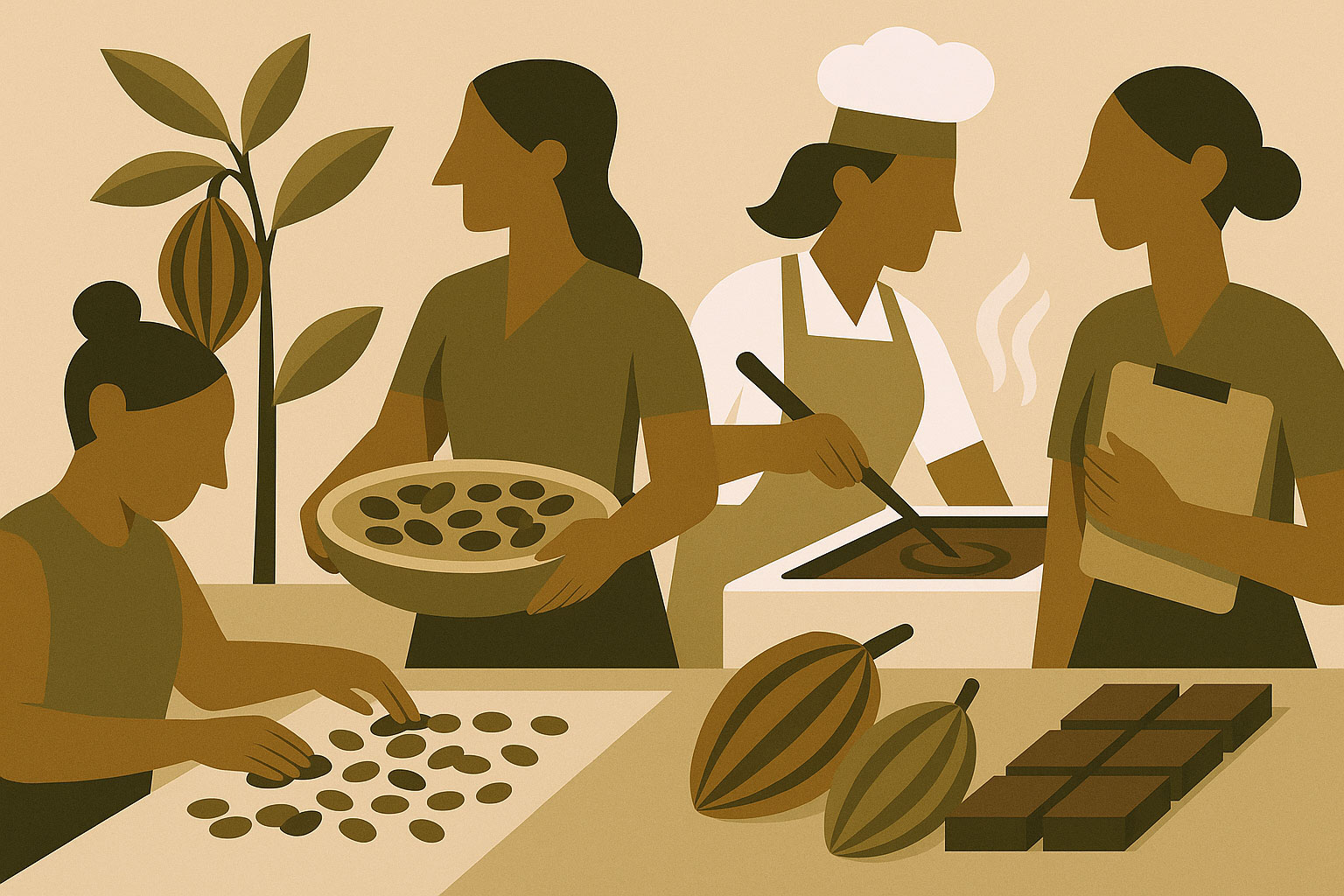
In Producing Countries: The Silent Pillars of the Cacao Chain
In West Africa, Latin America, and Asia, women represent nearly half of the agricultural workforce in the cacao sector. They:
– sort the beans,
– manage fermentation,
– dry and turn the harvest,
– handle logistics and administration within cooperatives.
And yet, they rarely own the land, have limited access to training or financing, and are often paid less than men.
In Consuming Countries: Chefs, Chocolatiers, Entrepreneurs
In Western countries, more and more women are redefining the chocolate industry.
As artisans, bean-to-bar brand founders, pastry chefs, and food scientists, they are transforming a field still largely dominated by men.
But the inequalities persist:
– Fewer than 25% of business leaders in the chocolate sector are women.
– Institutional recognition and funding opportunities remain limited.
An Invisibility That Belies Their Impact
The cacao sector depends on a complex chain, with women contributing at every step. Failing to name or recognize their role means perpetuating an incomplete, and unfair, vision of chocolate.
Bringing women to the forefront is not an act of activism.
It is simply a matter of seeing reality clearly, and creating space for a more balanced and truthful narrative.
Orfève’s Approach
At Orfève, we work with cooperatives where women hold real positions of responsibility.
Not symbolic roles, but active ones,in management, quality control, and decision-making.
The care, precision, and consistency our bars demand often stem from feminine gestures.
Sometimes discreet. Always essential.
And if our chocolate strikes the right balance, it’s also because those hands are watching, ensuring nothing is left to chance.