

A bit of History
Mexico is far more than just a cacao-producing country, it is the historical birthplace of the bean, where the cacao tree was first domesticated and where cacao held deep spiritual, social, and economic significance long before the arrival of Europeans.
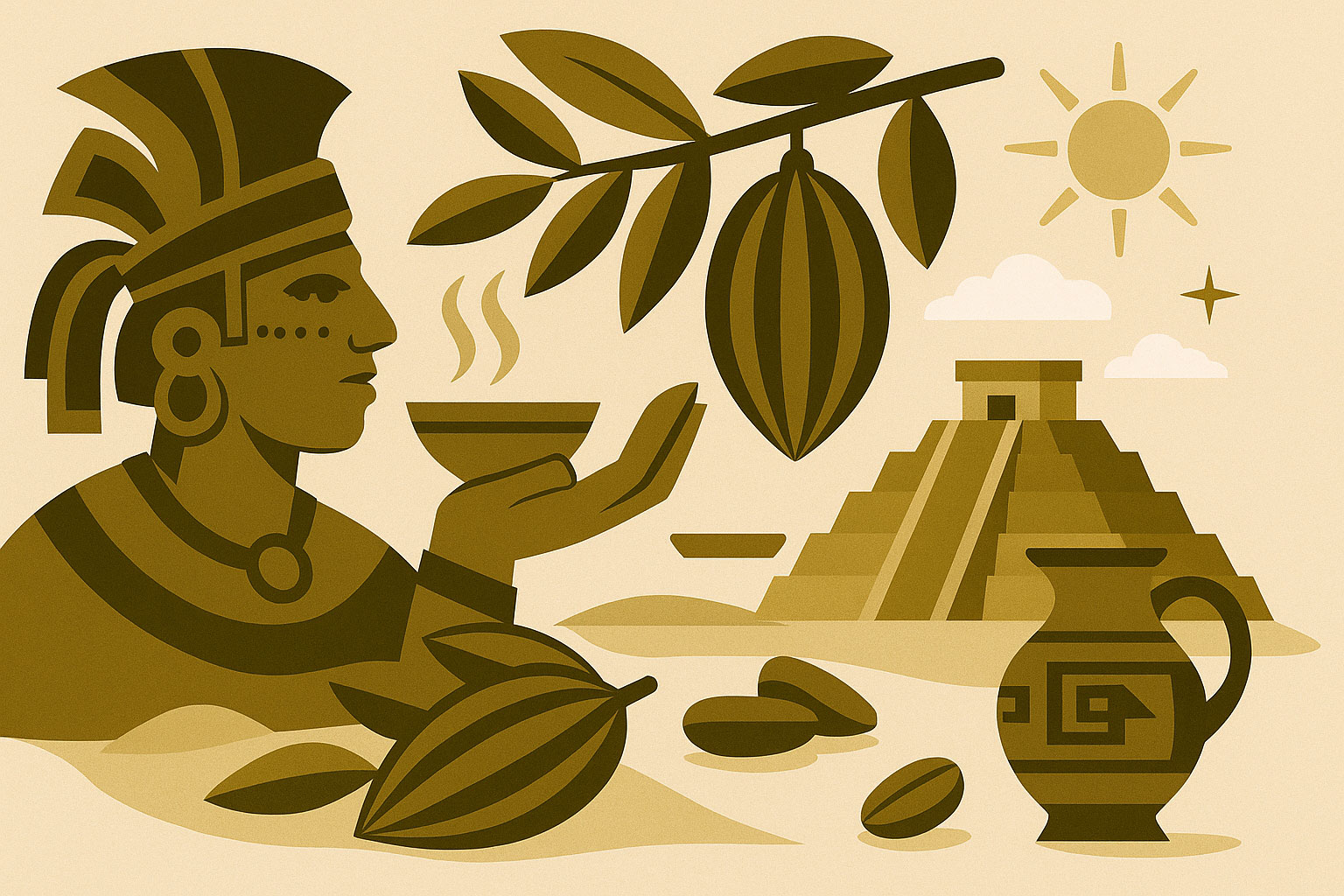
A Millennia-Old Origin
Archaeological traces found on pottery dating back over 3,500 years show that the Olmecs, one of Mesoamerica’s earliest great civilizations, were already using cacao.
Fermented, ritualistic, and sometimes blended with spices or maize, it played a central role in their ceremonies.
This knowledge was passed on and transformed by the Maya and then the Aztecs, for whom cacao became sacred nourishment, a form of currency, and a drink for the elite.
Among the Maya: A Sacred Drink
For the Maya, cacao, kakaw, was seen as a divine gift. It was consumed during religious rituals, weddings, initiation rites, and funerary offerings.
Made from cacao paste, water, chili, and sometimes honey, the drink was foamy, powerful, and served warm.
The Maya viewed cacao as a bridge between earth, sky, and humanity. Its use was never ordinary.
Among the Aztecs: Currency and Privilege
For the Aztecs, cacao was so valuable it served as currency. Beans were exchanged for goods, services, and even taxes. Chocolate, known as xocolatl, was reserved for nobles, warriors, and priests.
The drink, always bitter, was often flavored with chili or vanilla, but never sweetened. It was believed to strengthen the body, sharpen the mind, and honor the gods.
The Conquest: Rupture and Transmission
When Spanish conquistadors arrived in Mexico in the 16th century, they encountered a cacao that was sacred, codified, and inseparable from local culture. Fascinated, they brought the beans back to Europe, but changed the recipe: cacao became sweetened, refined, and aristocratic.
Europe would gradually forget cacao’s ritual roots… but Mexico never lost the memory.
Orfève’s Approach
At Orfève, we do not forget where cacao comes from. Long before Europe, it was the peoples of Mesoamerica who discovered its potential, invented the practices, and passed down the traditions.
Fermentation, ritual beverages, bean selection,it all began there.
We owe them the essentials.
Our work follows that silent legacy, not to imitate or rewrite, but to consciously transform what others once shaped with wisdom.