

A bit of History
Long before chocolate became a global indulgence, cacao held a central place in Maya culture. More than just food, it was a sacred plant, a symbol of life, power, and connection to the divine.
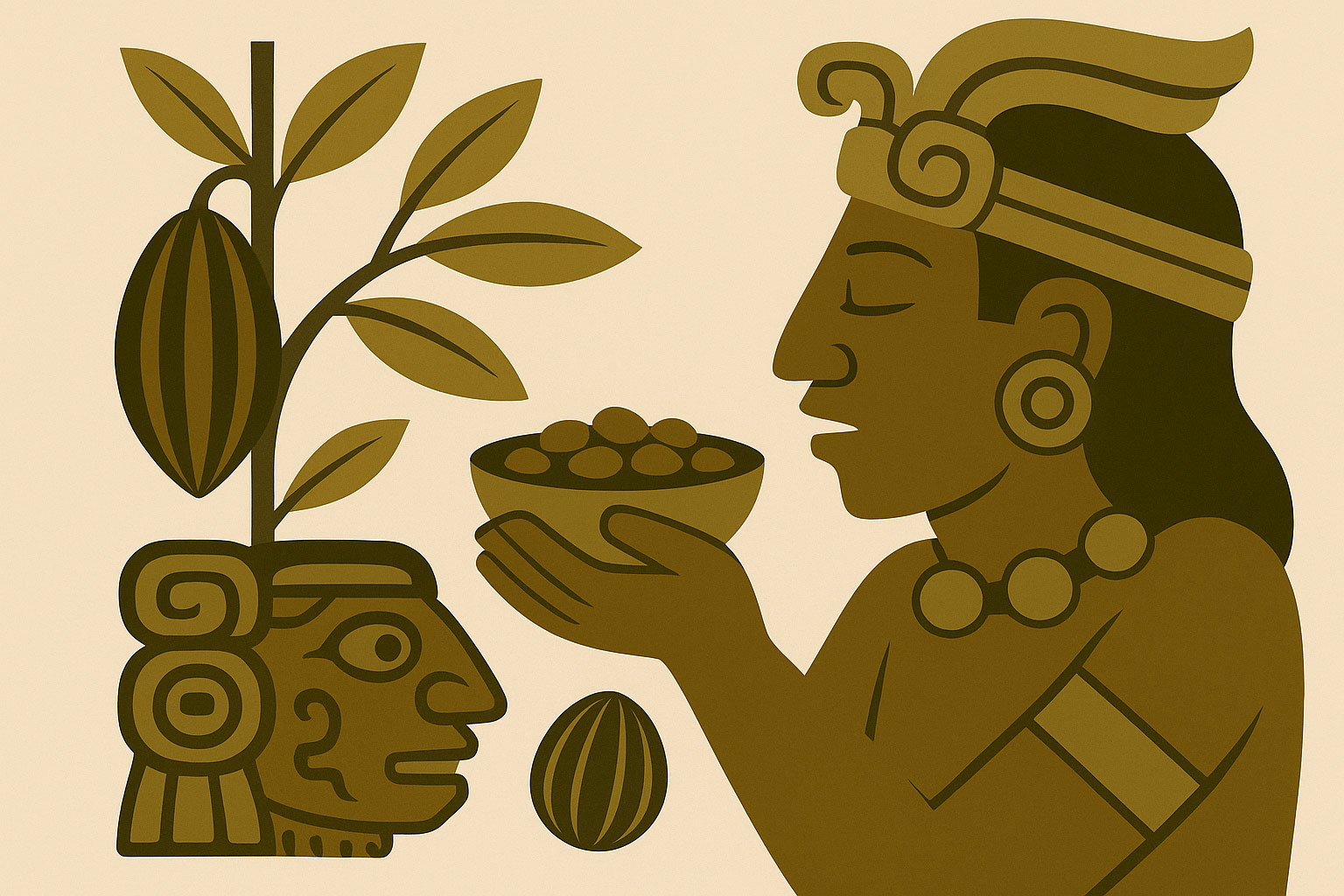
A Ritual Beverage
For the Maya, cacao was prepared as a bitter drink, often emulsified with water and sometimes enhanced with chili, flowers, or maize.
It contained no sugar or milk, this was an energizing, stimulating, and ritual beverage, consumed during major ceremonies, diplomatic encounters, or important events.
This drink was reserved for the elite: kings, priests, and high dignitaries. Common people rarely consumed it, except during significant festivals.
Cacao as Offering and Currency
Cacao wasn’t just consumed, it was counted. Dried beans served as a form of currency, accepted in markets to buy clothing, tools, or food.
Beans were also part of funerary rites, offered to the gods or placed as provisions for the afterlife. Cacao thus symbolized wealth, fertility, and regeneration.
A Mythological Plant
In sacred texts such as the Popol Vuh, cacao is linked to the creation of the world and the connection between gods and humans.
It was said to grow in the divine gardens, alongside maize and copal. It was considered a sacred gift, born of the earth but carrying a celestial message.
Orfève’s Approach
At Orfève, we recognize the Maya legacy in every bean we transform.
This is not romantic nostalgia, it is a duty of respect: never to forget that cacao was first a cultural plant, long before it became a raw material.
Working with chocolate through rigor, traceability, and high standards is our way of honoring those who first gave cacao its uses, its meaning, and its soul.