

A bit of History
Chocolate hasn’t always been the casual square we munch on in the afternoon. Before becoming a global product, it was embedded in specific uses, codified gestures, and deeply rooted social or spiritual contexts. From sacred beverage to ceremonial ingredient, from aristocratic luxury to festive symbol, chocolate’s story is also told through the ways it has been consumed.
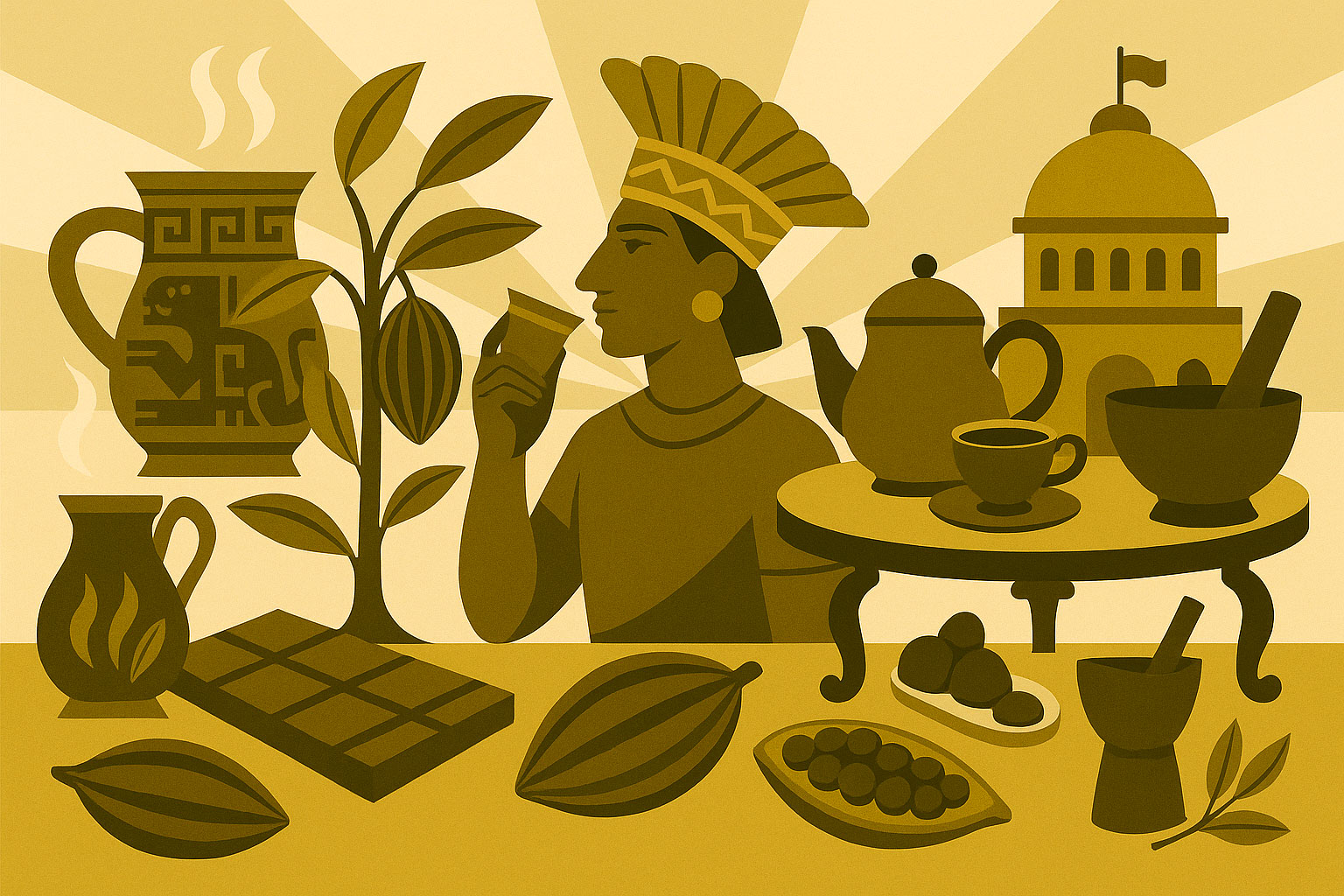
Sacred Cacao in Mesoamerican Civilizations
For the Mayans, Olmecs, and Aztecs, cacao was first and foremost a ritual beverage. Served bitter and often spiced with chili or annatto, it was consumed during religious or political ceremonies.
Cacao wasn’t food, it was a symbolic medium: offered to the gods, used in weddings, births, or funerary rites. It also circulated as currency and a means of trade.
Drinking cacao was a sacred act. The froth, carefully recreated by pouring the liquid from one vessel to another, was considered the most precious part of the drink.
At European Courts: An Aristocratic Ritual
When chocolate arrived in Europe in the 16th century, it was first reserved for royal courts. It was consumed hot, flavored, and served in porcelain or silver cups.
Served in the morning, in salons or private chambers, it became a social marker, blending luxury, indulgence, and performance.
In France under Louis XIV or in the Spanish court, the service of chocolate followed a precise protocol. Sugar, cinnamon, nutmeg, milk, or beaten eggs were added depending on taste. Chocolate became an emblem of refinement, every bit as codified as tea service in the United Kingdom.
West Africa: Cacao, But Little Chocolate
In producing countries like Côte d’Ivoire, Ghana, or Cameroon, chocolate has not historically been widely consumed, despite the omnipresence of cacao.
But this is beginning to change. Young local artisans are now bringing the bean back into domestic consumption.
We’re now seeing:
– Drinking chocolate made from raw ground cacao,
– Tasting sessions in artisanal production centers,
– Events celebrating cacao as a cultural and identity-bearing product.
The ritual isn’t inherited,it’s being built.
Japan: The Aesthetics of the Moment
Japan has developed a unique relationship with chocolate. Introduced in the 20th century, it became a product of refinement and detail.
Chocolate is offered with care on Valentine’s Day (when women gift it to men), and it’s also consumed in miniature formats, paired with tea or moments of contemplation.
Japanese chocolate tasting emphasizes:
– A sense of minimalism,
– A search for subtle balance,
– Pairings with soft, melt-in-the-mouth textures.
Here, chocolate aligns with the spirit of kigatsuku: the attention paid to others, to the moment, and to the beauty of the gesture.
Today: Toward a Contemporary Ritual
With the rise of bean-to-bar chocolate and origin-based sourcing, new tasting rituals are emerging:
– Vertical tastings (same origin, different percentages),
– Horizontal tastings (same percentage, different origins),
– Chocolate pairings with wine, coffee, or cheese,
– Guided sensory analysis (texture, aromas, finish, balance).
Like wine or tea, chocolate is reclaiming its cultural dimension. We don’t just eat it anymore, we taste it. Slowly. Attentively.
Orfève’s Approach
At Orfève, we believe good chocolate should be enjoyed like a good dish: with desire, curiosity, and true sensory pleasure.
No fixed ritual is needed. Just a square, a pause, and flavor unfolding.
Our recipes are both simple and full.
No flavorings, no powders, no additives, only fine cacao beans, raw cane sugar, and precise craftsmanship.
This deliberate restraint lets the melt, the lingering finish, and the cacao’s natural expressiveness shine through.
Each bar tells a story of origin, fermentation, and carefully chosen roasting.
It may surprise, move, or delight. That’s what we love: chocolate that’s alive, dense, and makes you smile.
At Orfève, pleasure is never a matter of decor, it’s a matter of taste.